Whether you’re heading a few kilometres offshore chasing snapper or planning a full day targeting tuna beyond the reefs, fuel planning should be one of the first things on your checklist. Running short on fuel is one of the easiest mistakes to avoid, yet it continues to catch out inexperienced boaters every year.
The truth is there isn’t a single answer to how much fuel an offshore fishing boat uses. Every boat is different. Hull design, engine size, weather conditions, sea state, cruising speed and even the amount of gear on board all play a part. An aluminium fishing boat powered by a modern four-stroke engine will often have very different fuel consumption compared to a heavier fibreglass boat with the same horsepower.
Understanding what affects fuel use helps you plan your trips more confidently. It also allows you to estimate your range more accurately, avoid unnecessary costs and spend more time doing what matters most—fishing.
In this guide, we’ll explain what influences fuel consumption, how offshore anglers can estimate fuel requirements before leaving the ramp and how choosing the right offshore fishing boat can make every litre go further.
Why Fuel Consumption Matters Offshore
Fuel is about much more than the cost of filling your tank. Offshore, it directly affects how far you can safely travel, how long you can stay on the water and whether you have enough reserve to deal with changing conditions.
Unlike fishing in sheltered rivers or estuaries, offshore trips leave very little room for error. Wind can strengthen throughout the day, swells can build unexpectedly and currents can slow your return journey. All of these factors increase fuel consumption.
Good fuel planning gives you confidence before you leave the boat ramp. It helps you choose realistic destinations, understand your boat’s range and reduce unnecessary risks. That’s why experienced offshore anglers don’t simply look at how much fuel their boat holds. They also understand how quickly their boat uses that fuel in real-world conditions.
At Sea Raider, we encourage every owner to think beyond fuel capacity alone. A large fuel tank is valuable, but knowing how your boat performs in different conditions is even more important.
What Determines Fuel Consumption?
One of the biggest misconceptions among new boat owners is that engine size alone determines fuel usage. While horsepower certainly plays a role, it is only one piece of the puzzle.
The design of the hull has a significant impact on efficiency. A well-designed aluminium fishing boat can plane more efficiently, reducing drag and requiring less power to maintain a comfortable cruising speed. Less resistance generally means lower fuel consumption over the course of a trip.
Boat weight also matters. Every extra passenger, icebox, tackle box, spare battery or jerry can adds weight. The heavier the boat becomes, the harder the engine has to work. Even a full live bait tank can influence fuel efficiency during a long offshore session.
Weather conditions are another major factor. Calm seas allow your boat to maintain an efficient cruising speed with relatively little effort. Headwinds, rough swells and strong tidal currents force the engine to work harder, increasing fuel use significantly. Two trips to the same fishing location can produce very different fuel figures simply because the conditions have changed.
Cruising speed is equally important. Most offshore fishing boats have a speed where the engine operates efficiently without excessive fuel burn. Travelling much faster than this often results in a noticeable increase in litres consumed per hour while saving very little travel time.
Regular maintenance also contributes to fuel efficiency. A well-serviced engine, correctly pitched propeller and clean hull help your boat perform as intended. Ignoring routine maintenance can gradually increase fuel consumption without many owners even noticing.
Typical Fuel Usage for Offshore Fishing Boats
Many first-time buyers ask how many litres per hour an offshore fishing boat uses. While exact figures vary between boats and engines, there are some general expectations that can help with trip planning.
Smaller offshore fishing boats around the five-metre mark equipped with modern outboards typically use far less fuel than larger offshore vessels, particularly when travelling at an economical cruising speed. As boat size increases, fuel consumption naturally rises because larger boats usually carry more weight and require more horsepower to maintain performance.
Engine technology has also improved considerably over the past decade. Modern four-stroke outboards are generally quieter, smoother and more fuel-efficient than many older engines, especially during extended cruising. Pairing an efficient engine with a lightweight aluminium hull often produces excellent offshore performance without excessive fuel use.
It’s also worth remembering that trolling, cruising and travelling at full throttle all produce very different fuel consumption figures. A day spent slow trolling for Spanish mackerel may use considerably less fuel than repeatedly travelling long distances between offshore reefs at higher speeds.
Rather than focusing on achieving the lowest possible fuel consumption, offshore anglers should aim for predictable fuel usage. Understanding how your own boat performs under normal fishing conditions allows you to plan future trips with much greater confidence.
Calculating Your Offshore Range
Knowing how much fuel your boat uses is only half the equation. You also need to understand how far that fuel will take you. This is known as your boat’s range, and it’s one of the most important figures to know before heading offshore.
Range isn’t simply based on the size of your fuel tank. It depends on your average cruising speed, engine efficiency and the conditions you’ll face throughout the day. A boat travelling across calm water with a light load may comfortably reach fishing grounds well offshore. The same boat could use considerably more fuel if it encounters strong headwinds or a building swell on the return trip.
This is why experienced offshore anglers keep records after every outing. They note how many litres were used, how far they travelled, the weather conditions and how heavily the boat was loaded. Over time, these records become far more valuable than relying on estimates or manufacturer figures alone.
Modern GPS units and multifunction displays can also help monitor distance travelled and fuel usage when paired with compatible engine systems. These tools make it easier to understand your boat’s real-world performance and improve planning for future trips.
At Sea Raider, we always recommend getting to know your boat gradually. Start with shorter offshore runs and build confidence as you learn how your aluminium fishing boat performs in different conditions.

Why the One-Third Rule Still Makes Sense
One of the most widely accepted principles in offshore boating is the One-Third Rule. While every trip is different, the idea is simple and has stood the test of time because it builds a healthy margin of safety into every journey.
The first third of your fuel is used to reach your destination. The second third is reserved for returning home. The remaining third stays untouched unless it’s genuinely needed.
Conditions offshore can change quickly. Wind may strengthen during the afternoon, currents may work against you, or you might decide to explore another reef before heading home. Having a reserve gives you flexibility without creating unnecessary stress.
Many experienced anglers return to the ramp with more fuel than they expected to use. That isn’t wasted fuel. It’s evidence that the trip was planned well.
While modern electronics make fuel monitoring easier than ever, they should never replace sensible planning. A generous reserve remains one of the simplest ways to improve safety on the water.
Australian Conditions Can Change Your Fuel Usage
Australian offshore conditions are incredibly diverse. A calm morning off the Queensland coast can quickly become a rough afternoon once the sea breeze arrives. Southern waters often experience stronger swells, while tidal currents across northern Australia can significantly affect travel times.
These conditions all influence fuel consumption.
Travelling into a head sea usually requires more throttle to maintain speed. Following seas may allow the boat to move more efficiently, while quartering seas often require constant adjustments to throttle and trim. Strong currents can also increase travel time, particularly if you’re returning against the tide.
Weather forecasts should always form part of your trip planning, but forecasts aren’t guarantees. Understanding how changing conditions affect fuel usage allows you to make better decisions before and during your trip.
It’s also worth remembering that offshore fishing often involves more than simply travelling from the boat ramp to one location. Many anglers spend the day moving between reefs, bait grounds and productive fishing areas. Those additional runs can add up over the course of a full day’s fishing.
Planning Fuel for a Typical Offshore Fishing Day
Every offshore trip is different, but having a simple plan before leaving the ramp can make the day run much more smoothly.
Start by estimating how far you’ll travel to your primary fishing destination. Then think about any additional movement during the day. You might decide to change locations if the fish aren’t biting or move further offshore if conditions remain favourable.
Next, consider how long you’ll spend trolling or cruising between fishing grounds. While trolling generally uses less fuel than travelling at cruising speed, it still contributes to your overall fuel usage.
Finally, allow for the unexpected. Weather changes, detours, helping another boater or simply spending longer on the water than planned can all increase fuel consumption.
Good offshore planning isn’t about calculating every litre perfectly. It’s about giving yourself enough flexibility to enjoy the day without constantly worrying about the fuel gauge.

How to Improve Fuel Efficiency Without Sacrificing Performance
Fuel efficiency isn’t about driving as slowly as possible. It’s about helping your boat operate where it performs best.
Smooth throttle inputs make a noticeable difference over a full day’s fishing. Constant acceleration and sudden changes in speed increase fuel consumption and create unnecessary engine load. Finding a comfortable cruising speed that suits both the conditions and your boat often provides the best balance between travel time and efficiency.
Keeping unnecessary weight off the boat also helps. It’s tempting to pack every piece of fishing gear you own, but equipment that never leaves its storage compartment still has to be carried by the boat. Before each trip, take only what you’ll realistically use.
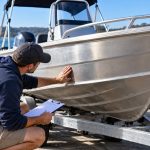
Engine servicing remains another important factor. Fresh engine oil, clean fuel filters and a correctly maintained propeller help ensure the engine performs efficiently throughout the season. Likewise, keeping the hull clean reduces drag, allowing the boat to move through the water more easily.
Learning how to trim the engine correctly is another skill that pays dividends. Proper trim can improve ride comfort, reduce resistance and lower fuel consumption, particularly during longer offshore runs.
These small habits might only save a little fuel on each outing, but across an entire boating season they can make a noticeable difference.
Why Aluminium Fishing Boats Are Known for Their Efficiency
One of the reasons aluminium fishing boats remain so popular among Australian anglers is their balance of durability, performance and efficiency.
A well-designed aluminium hull is typically lighter than many comparable fibreglass boats. Less weight often means the engine doesn’t need to work as hard to achieve an efficient cruising speed. That can contribute to lower fuel consumption while still delivering the strength needed for offshore conditions.
Modern aluminium hull designs have also evolved considerably. Advances in hull shape, balance and construction help many offshore fishing boats provide a smoother ride while maintaining excellent stability for fishing.
Of course, fuel efficiency isn’t determined by hull material alone. Engine selection, load, weather conditions and driving style all play important roles. However, combining a lightweight aluminium hull with a modern outboard creates an efficient package that suits the long distances many Australian anglers regularly travel.
At Sea Raider, every boat is designed with real Australian boating conditions in mind. Whether you’re chasing reef species, pelagic fish or simply exploring the coastline, understanding your boat’s performance helps you plan safer and more enjoyable days on the water.

Final Thoughts
There is no single answer to how much fuel an offshore fishing boat uses. Every trip is different, and every boat has its own characteristics. Factors such as hull design, engine size, weather, sea conditions and boat loading all influence fuel consumption.
The key is understanding your own boat. Recording fuel use after each trip, planning conservatively and maintaining a healthy fuel reserve will help you make better decisions every time you head offshore.
For many Australian anglers, aluminium fishing boats offer an excellent combination of strength, efficiency and practicality. When paired with sensible trip planning and regular maintenance, they provide the confidence to explore Australia’s incredible offshore fishing grounds safely and efficiently.
Whether you’re preparing for your first offshore adventure or you’re a seasoned skipper looking to refine your fuel planning, taking the time to understand your boat’s fuel consumption is an investment in both safety and enjoyment. The more familiar you become with your boat’s performance, the more confidently you’ll be able to plan every offshore fishing trip.
Frequently Asked Questions
Fuel consumption varies depending on the size of the boat, engine, load and sea conditions. Smaller offshore fishing boats generally use less fuel than larger vessels, but every setup performs differently. Recording your own fuel usage over several trips provides the most reliable guide.
Many aluminium fishing boats are lighter than comparable fibreglass models, which can improve fuel efficiency. However, hull design, engine choice and operating conditions also have a significant impact on overall fuel consumption.
A conservative approach is always best. Many experienced offshore boaters follow the One-Third Rule, reserving fuel for the journey out, the return trip and an emergency reserve.
Yes. Strong winds, larger swells and tidal currents can all make the engine work harder, increasing fuel usage compared to calm conditions.
Regular servicing, correct engine trim, maintaining a clean hull, reducing unnecessary weight and cruising at an efficient speed all help improve fuel economy.
No. Fuel gauges are useful, but they should be supported by careful trip planning and an understanding of your boat’s average fuel consumption in different conditions.
Modern four-stroke outboards are generally more fuel-efficient than many older engines, particularly during extended cruising. Actual fuel use still depends on how the boat is operated and maintained.
Good fuel planning reduces risk, provides greater confidence on the water and ensures you have enough reserve to deal with changing weather, longer travel times or unexpected situations.