Is a single or twin outboard better for offshore fishing?
A twin outboard setup is generally worth considering if you regularly travel long distances offshore and want the added security of a second engine. If one motor develops a fault, the other may still be able to get you back towards shore, provided the remaining engine, fuel supply and electrical systems are functioning. However, twin outboards cost more to buy, install, maintain and operate. A single outboard is usually lighter, simpler and less expensive to run, making it a practical choice for many offshore fishing boats. The best option depends on the boat’s size, hull design, rated engine capacity, fishing distance and budget. Always follow the manufacturer’s power and engine-weight limits.
Choosing an outboard setup is one of the more important decisions when buying an offshore fishing boat. The engine affects how the boat accelerates, handles different loads, uses fuel and performs when conditions become challenging. It also has a direct impact on how much you spend on servicing and maintenance over the years.
For many Australian anglers, the choice comes down to a single high-powered outboard or two smaller engines. Both arrangements can work well, but they suit different boats and fishing habits. Someone who regularly heads a long way offshore may place more value on having a second engine, while an angler who fishes closer to the coast may prefer the lower purchase and running costs of a single.
There is no universal answer. Understanding the differences will help you choose an engine configuration that suits your boat rather than paying for power or equipment you may not need.
1. What Is the Difference Between Single and Twin Outboards?
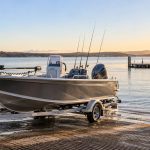
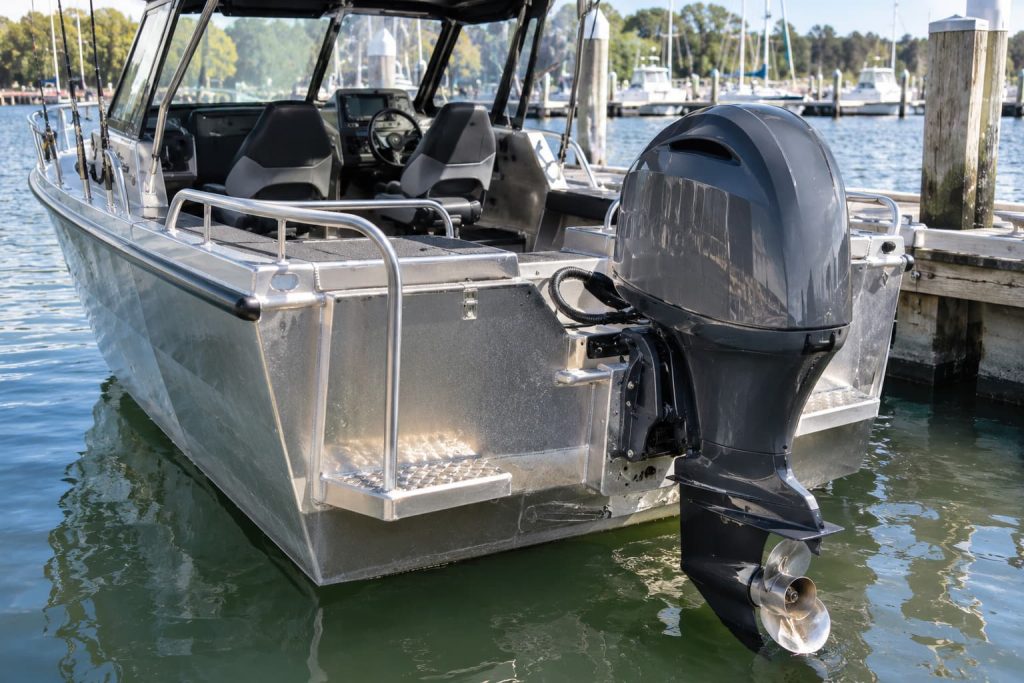
A single outboard setup uses one engine mounted on the transom. The engine provides all the boat’s propulsion and is responsible for acceleration, cruising and manoeuvring. Many trailerable aluminium fishing boats use this configuration because it keeps the installation relatively straightforward and leaves more room and weight capacity for passengers, fuel and fishing equipment.
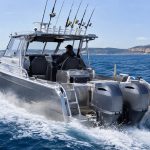
A twin outboard setup uses two engines mounted side by side on the transom. The engines work together to propel the boat, and the combined horsepower must remain within the boat’s approved limits. Depending on the boat and installation, twin engines may also use counter-rotating propellers to help balance propeller torque and improve handling.
The main difference is not simply the number of engines. Twin installations involve additional controls, steering components, fuel connections, electrical systems and maintenance requirements. They also add weight to the transom, which needs to be considered when choosing a boat and engine package.
2. Advantages of a Single Outboard for Offshore Fishing
Lower Purchase and Installation Costs
The biggest advantage of a single outboard is its cost. You only need to purchase one engine, along with the associated controls, rigging and installation. This can make a substantial difference when comparing two otherwise similar boat packages.
The savings do not stop at the initial purchase. There is only one engine to service, one set of engine components to maintain and fewer mechanical systems to inspect. For owners who use their boats regularly, this can reduce annual maintenance expenses.
Lower Weight on the Transom
A single engine generally weighs less than a comparable twin installation with similar combined horsepower. Keeping weight down at the rear of the boat can help maintain the intended balance and leave more capacity for passengers, fuel and fishing equipment.
This matters on aluminium fishing boats where owners may carry several people, ice, tackle, bait, batteries and other gear. The final engine package needs to be considered alongside the boat’s loaded weight, not just the hull’s advertised dry weight.
Simpler Maintenance
With one engine, there are fewer service items and mechanical connections to look after. Routine servicing, inspections and troubleshooting are generally more straightforward. There is also less engine-related equipment on the transom, which can make access easier depending on the boat’s layout.
A well-maintained modern outboard can provide dependable service for offshore fishing. However, a single engine does mean that the boat relies on that one motor for propulsion. If it stops working offshore, there is no second outboard available to continue the journey.
Is a Single Outboard Powerful Enough for Offshore Fishing?
Yes. A correctly matched single outboard can provide more than enough power for many offshore fishing boats. The important factors are the hull’s design, weight, recommended horsepower range, propeller selection and the way the boat will be loaded.
A larger single engine can provide strong acceleration and cruising performance without the additional weight and complexity of twin engines. However, increasing horsepower beyond what the boat is designed to carry is not a sensible way to improve offshore performance. The Australian Builders Plate and manufacturer’s specifications should always guide the decision.
3. Advantages of Twin Outboards for Offshore Fishing
A Second Engine for Added Redundancy
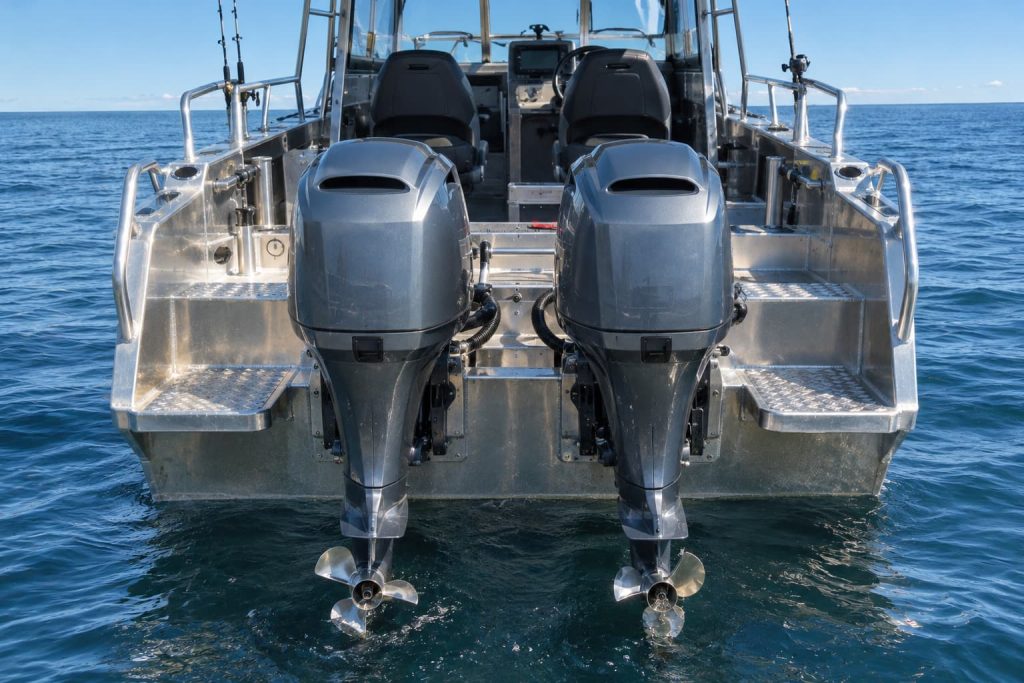
The biggest reason many offshore anglers choose twin outboards is the presence of a second engine. If one motor develops an isolated mechanical fault, the other may still provide enough propulsion to return towards shore or reach a safer location.
This added redundancy can provide peace of mind when fishing further offshore, particularly when travelling with family or spending long periods away from sheltered waters. It is important to understand that the remaining engine may not be able to maintain normal cruising speed. The boat may need to travel more slowly, and its handling could change considerably.
Twin engines do not make a boat immune to breakdowns. If both engines share a contaminated fuel supply, suffer an electrical problem or are affected by another common system failure, having two motors may offer little advantage. Good maintenance, suitable safety equipment, communication devices and a float plan remain essential.
More Available Power
Twin outboards can provide greater combined horsepower, depending on the selected engine package. This can be useful for larger and heavier offshore boats that need additional power to carry passengers, fuel and equipment while maintaining suitable performance.
The benefit is not simply about achieving a higher top speed. The right configuration should allow the hull to operate comfortably within its intended performance range. Engine selection needs to account for the boat’s displacement, loading, hull characteristics and operating conditions.
Manoeuvring and Control
Two outboards can provide useful manoeuvring options, particularly when the engines can be controlled independently. By selecting different gear directions and throttle settings, an experienced operator may be able to adjust the boat’s movement at low speeds.
The extent of this benefit depends on the installation, steering system and available controls. Some modern twin-engine systems also support joystick docking and other assisted manoeuvring functions when compatible equipment is fitted.
Suitable for Larger Offshore Boats
As boats become longer, heavier and more powerful, twin engines may become a more suitable arrangement. Some hulls are designed specifically around twin outboards, while others offer single and twin configurations as approved options.
This is particularly relevant when comparing larger plate aluminium boats and offshore catamarans. The hull’s transom, engine spacing, rated power and maximum engine weight all influence which setup is appropriate.
4. Single vs Twin Outboards: Fuel Consumption
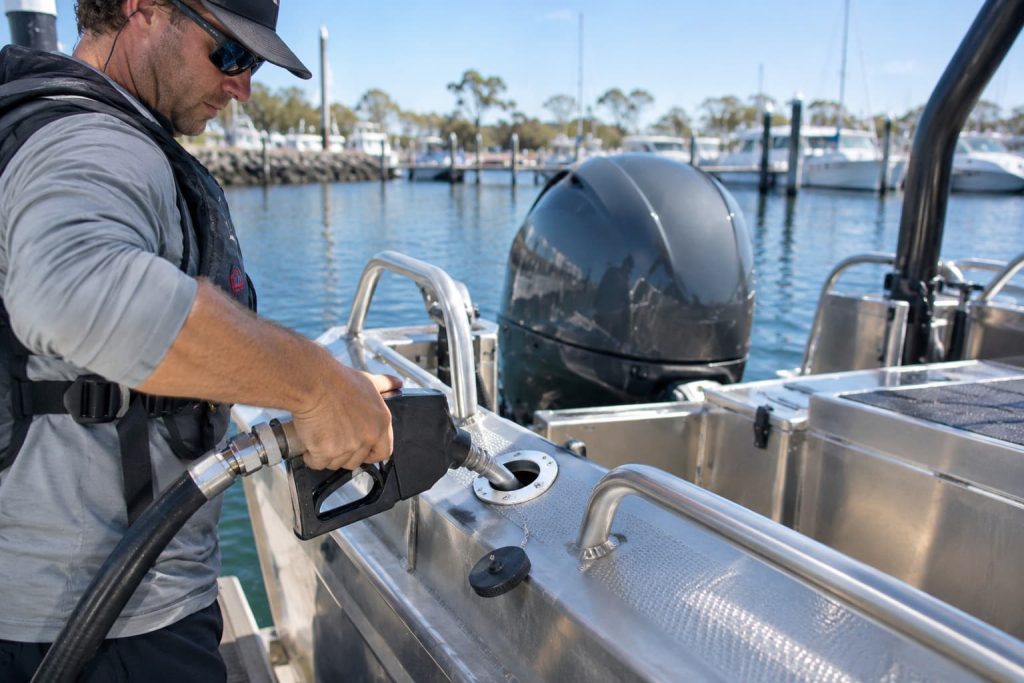
Fuel consumption is an important consideration for Australian offshore anglers because longer fishing trips can involve substantial distances. The amount of fuel a boat uses depends on several factors, including engine size, hull design, boat weight, propeller selection, cruising speed, sea conditions and the amount of equipment on board.
A single outboard will often be more economical than twin engines when comparing similar boats under similar operating conditions. There is only one engine running, and the installation generally has less total weight and drag. However, the result is not guaranteed in every situation.
Twin outboards may offer advantages on a boat designed around their combined power. They can operate at different throttle settings depending on the installation, but running both engines adds mechanical load and generally increases fuel use compared with a suitable single-engine alternative.
When comparing engine packages, ask for realistic fuel consumption figures at the boat’s expected cruising speed. A top-speed fuel figure alone will not tell you how much fuel you will use during a normal fishing trip.
Also consider the boat’s fuel tank capacity and reserve requirements. Offshore range should be calculated using realistic conditions, including the outward journey, return journey, time spent travelling or searching, and a suitable reserve. Never plan a trip around the assumption that you will use every litre in the tank.
5. Maintenance and Ownership Costs
The purchase price is only one part of the cost of owning an offshore fishing boat. Both single and twin outboards require regular servicing, inspections and replacement of wear components, but a twin installation usually involves more work.
With two engines, owners have additional engine oil, filters, spark plugs, gearcase lubricants and other service items to account for, depending on the manufacturer’s maintenance schedule. There may also be additional steering connections, controls, wiring and rigging that need inspection.
Insurance premiums can also differ depending on the boat’s value, engine configuration, intended use, location and the insurer’s assessment. It is worth obtaining insurance quotes for both configurations before making a final decision.
A single outboard generally makes more financial sense when keeping purchase and ongoing costs down is a priority. Twin outboards involve greater initial spending, but some offshore owners consider the additional engine worthwhile for the redundancy and performance it provides.
The best comparison is the total ownership cost over several years, rather than the difference in engine purchase price alone.
6. What Happens if an Engine Fails Offshore?
Engine failure is one of the main concerns when travelling offshore. With a single outboard, a serious engine problem can leave the boat without its own propulsion. The skipper may need to use an anchor where appropriate, contact marine rescue or request assistance from another vessel.
With twin outboards, an isolated failure in one engine may still leave the other available. This can provide a valuable option, but the boat may not steer or perform normally on one engine. The operator should follow the engine and boat manufacturer’s guidance and avoid assuming that the remaining motor can safely handle every situation.
It is also important to recognise the limits of engine redundancy. Two engines do not protect against every possible failure. Contaminated fuel, a shared electrical fault, a damaged propeller, steering problems or running out of fuel can still affect the entire boat.
For offshore fishing, a suitable VHF radio, a correctly registered EPIRB, reliable navigation equipment, appropriate safety gear and a working bilge pump are essential considerations. Keep communication and emergency procedures in mind regardless of whether your boat has one engine or two.
7. How Does Boat Size and Hull Design Affect the Decision?
The right engine setup starts with the boat itself. A smaller aluminium fishing boat designed around a single outboard may not have the transom capacity, engine spacing or weight allowance for twin motors. Installing additional horsepower without approval can affect the boat’s balance, handling and safety.
Larger offshore boats may be designed to accommodate either configuration. The hull’s beam, displacement, transom construction and intended operating conditions all influence the choice. Catamarans, for example, often use twin outboards because of their hull arrangement and propulsion requirements.
When comparing boats, check the Australian Builders Plate for maximum power, maximum engine weight and other relevant capacity information. Follow the manufacturer’s approved engine configurations and do not assume that a boat can safely accept a twin setup simply because there appears to be enough room on the transom.
It is also worth considering the weight of the complete installation. Two smaller engines may have a different total weight and performance outcome from one larger engine with similar combined horsepower. The manufacturer or a qualified marine professional can help determine which arrangement is appropriate.
8. Which Setup Is Better for Different Offshore Fishing Habits?
For anglers who mainly fish coastal reefs, bays and offshore grounds within a reasonable distance of shore, a single outboard may be a sensible choice. It can provide the required power while keeping the boat lighter, simpler and less expensive to own. This is particularly attractive for owners who want to maximise their budget for electronics, safety equipment and fishing accessories.
For anglers who regularly travel long distances offshore, a twin setup may be worth considering. The added engine redundancy can provide reassurance when operating further from sheltered waters, while the additional power may suit a larger and heavier boat.
Commercial operators and owners who spend extended periods offshore may have different requirements again. Their decision should account for operating hours, passenger or equipment loads, downtime, service arrangements and the consequences of losing propulsion.
Think about how you actually use the boat rather than choosing the configuration that looks more impressive. A properly matched single engine is better than an unsuitable twin installation, and two engines cannot replace good preparation or safe decision-making.
9. Single or Twin Outboards on Sea Raider Boats?
Sea Raider offers different engine configurations across its aluminium boat range, depending on the model and its intended use. The 7.5m Pro Fisher, for example, is rated for 250hp to 350hp and can be configured with a single or twin outboard setup. It has a 350-litre fuel tank, a 2.45m beam and a 1,700kg nominal hull-only dry weight.
This gives buyers the opportunity to consider a single-engine package for a simpler installation or a twin configuration where offshore redundancy is a priority. The correct choice should be made in line with the approved specifications and the complete loaded weight of the boat.
Sea Raider’s larger models also offer different power arrangements, so buyers should compare the specifications of each hull before choosing. The important thing is to match the engine package to the way the boat will be used, rather than selecting an arrangement based on horsepower alone.
10. How to Choose the Right Outboard Setup
Before deciding between single and twin outboards, consider the following points:
- Fishing distance: How far offshore do you normally travel, and how long are you away from sheltered water?
- Boat size: Is the hull designed and rated for a single engine, twin engines or both?
- Power requirements: Does the selected setup provide suitable performance for the boat’s normal loaded weight?
- Fuel range: Can the tank capacity support your planned trips with an appropriate reserve?
- Redundancy: Would having a second engine provide meaningful reassurance for your fishing habits?
- Budget: Have you accounted for purchase, installation, servicing, insurance and fuel?
- Transom capacity: Does the boat support the total engine weight and mounting arrangement?
- Safety equipment: Do you have the communication, navigation and emergency equipment needed for offshore operation?
If you are unsure, discuss the options with the boat manufacturer and an experienced outboard dealer. They can help compare engine packages and explain how each setup will affect performance, weight and operating costs.
Final Verdict: Single vs Twin Outboards
A single outboard is generally the more economical and straightforward option for many offshore fishing boats. It offers lower purchase and maintenance costs, less weight on the transom and fewer mechanical systems to manage.
Twin outboards are worth considering when offshore range, additional power and engine redundancy are important priorities. They can provide another way to maintain propulsion after an isolated engine failure, although they do not eliminate the risk of breakdowns or remove the need for proper safety preparation.
Ultimately, neither configuration is automatically the better choice. Start with the boat’s approved specifications, consider the conditions in which you fish and compare the complete cost of ownership. The right setup is the one that gives you suitable performance, practical range and confidence on the water without exceeding the boat’s design limits.
Frequently Asked Questions
Twin outboards provide engine redundancy because one motor may continue running if the other develops an isolated fault. This can be useful offshore, but it does not prevent all breakdowns. Shared fuel contamination, electrical faults or steering problems can affect both engines. Safety still depends on maintenance, equipment, planning and operating conditions.
Yes. Many offshore fishing boats operate successfully with a single outboard. The engine needs to be correctly matched to the hull, boat weight and intended use. A reliable, well-maintained single engine can be a practical choice for anglers who do not regularly travel extreme distances offshore.
Twin outboards generally use more fuel than a suitable single-engine installation when comparing similar boats and operating conditions. However, actual consumption depends on engine size, cruising speed, hull design, load and propeller selection. Compare fuel figures at realistic cruising speeds rather than relying only on maximum horsepower or top speed.
Some twin-engine boats can operate on one engine if the remaining motor is functioning correctly and the boat’s manufacturer permits it. Performance, steering and handling may change, and speed may need to be reduced. Owners should understand the manufacturer’s emergency operating instructions before relying on this capability.
Usually, yes. Two engines have additional service items and mechanical components compared with one engine. Twin installations may also involve extra steering, controls and rigging. The exact cost depends on the engines, service intervals, operating hours and the complexity of the installation.
It depends on the hull’s approved engine configurations and how the boat will be used. A single engine may provide a simpler and more economical package, while twins may suit owners who place greater value on redundancy. Check the manufacturer’s recommended horsepower and total engine-weight limits before deciding.
Twin outboards can provide additional manoeuvring options, particularly when they can be controlled independently. However, handling depends on engine spacing, steering equipment, propellers, hull design and operator experience. Twin engines do not automatically make every boat easier to handle.
Both engines may be affected by contaminated fuel if they draw from the same compromised supply. This is an important limitation of twin-engine redundancy. Proper fuel management, regular inspection, suitable filtration and careful refuelling practices remain important.
Only if the boat’s manufacturer has approved that configuration and the transom, horsepower rating, engine-weight allowance and other relevant specifications support it. Do not assume that a second engine can simply be added. Contact the manufacturer or a qualified marine professional before making changes.
Twin outboards may be worth considering for regular long offshore trips because the second engine can provide additional propulsion if one motor develops an isolated fault. However, the decision should also account for the boat’s design, fuel range, operating costs and safety equipment. A second engine is an extra layer of redundancy, not a guarantee of getting home.
Important note: Engine configurations, horsepower limits and maximum engine weights vary between boats. Always follow the Australian Builders Plate, boat manufacturer’s specifications and outboard manufacturer’s installation requirements. Offshore conditions can change quickly, so carry the required safety equipment and check marine weather forecasts before departure.