If you’ve started looking for a new fishing boat, you’ve probably noticed that many experienced Australian anglers recommend plate aluminium boats. They’re known for their strength, durability and ability to handle everything from sheltered estuaries to offshore fishing trips.
That doesn’t mean every plate boat is the same.
Different manufacturers use different hull designs, construction methods and layouts. Some boats are built for long runs offshore, while others are better suited to bays, rivers or family fishing. The best choice depends on where you fish, how often you’re on the water and the features that matter most to you.
This guide explains what makes a quality plate aluminium fishing boat, what to compare before buying and how some of Australia’s best-known plate boat builders approach their designs. Instead of focusing on marketing claims, we’ll look at the features that can make a real difference once you’re out on the water.
What Is a Plate Aluminium Fishing Boat?

A plate aluminium boat is built using thick sheets of marine-grade aluminium that are cut, shaped and welded together to form the hull. Unlike pressed aluminium boats, which are formed from thinner sheets using large presses, plate boats rely on welded construction to create a rigid and durable structure.
Most Australian manufacturers use 5083 marine-grade aluminium, which is widely recognised for its strength and corrosion resistance in saltwater environments. Combined with reinforced framing and quality welding, this creates a hull that’s designed to cope with demanding conditions.
Although every manufacturer has its own approach, quality plate boats usually include:
- Fully welded hull construction.
- Marine-grade aluminium.
- Reinforced ribs and stringers.
- Heavy-duty transoms.
- Deep-V hull designs for improved offshore performance.
These features are one of the reasons plate boats have become a popular choice for anglers who regularly fish Australia’s coastline.
Plate Aluminium vs Pressed Aluminium Boats
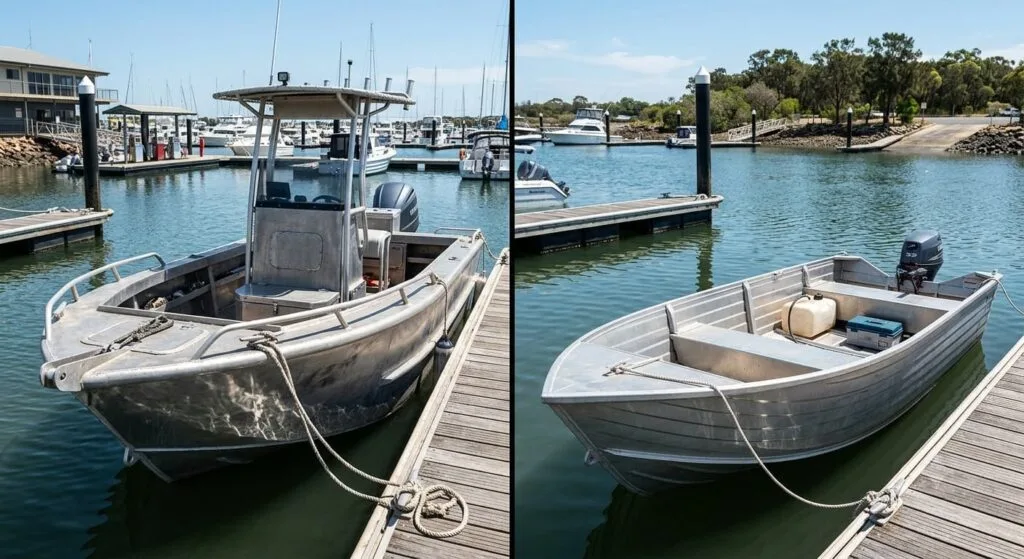
One of the biggest decisions buyers face is choosing between a plate aluminium boat and a pressed aluminium boat.
Both have their place, but they’re designed for different types of boating.
Pressed aluminium boats are lighter and generally more affordable. They’re well suited to calm waterways, rivers, lakes and estuaries where rough conditions are less common. Their lighter weight can also make them easier to tow and launch.
Plate aluminium boats are heavier because they’re built from thicker aluminium plate. The additional strength and welded construction make them a popular option for offshore fishing, where boats are more likely to encounter swell, chop and changing sea conditions.
Here’s a simple comparison.
| Plate aluminium boats | Pressed aluminium boats |
| Thicker aluminium construction | Thinner aluminium sheets |
| Fully welded hull | Pressed hull panels |
| Built for demanding conditions | Better suited to sheltered waters |
| Heavier and more robust | Lighter and easier to tow |
| Usually higher purchase price | Usually lower purchase price |
Neither option is automatically better. The right boat depends on where you fish most often and how you plan to use it.
Why Plate Aluminium Boats Are Popular
Australia has some of the most varied boating conditions in the world. It’s not unusual to launch in calm water, travel offshore and encounter changing wind and sea conditions before heading home.
That’s one reason plate aluminium boats have earned such a strong reputation among recreational and serious anglers.
Strength and durability
Plate boats are designed to handle regular use in demanding environments. Their thicker aluminium construction and reinforced internal framework help create a hull that’s built for long-term use.
Offshore capability
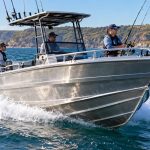
Many plate boats feature a deep-V hull, which is designed to improve the ride through chop and swell. Combined with the extra rigidity of welded construction, this can provide a more confident ride when conditions become challenging.
Long-term ownership
While plate boats often have a higher purchase price than pressed aluminium boats, many owners see them as a long-term investment because of their robust construction and durability.
Low maintenance
Aluminium boats are generally straightforward to maintain. Regular washing, routine servicing and checking the hull for damage after each trip can help keep the boat in good condition for years.
What Should You Compare Before Buying?
Looking beyond the brochure is one of the best ways to choose the right plate boat.
Hull design
Hull design plays a major role in how a boat performs.
A well-designed deep-V hull can improve comfort in rough water, while wider chines often provide greater stability when the boat is stationary and anglers are moving around the deck.
Aluminium grade
Most reputable manufacturers build their boats using 5083 marine-grade aluminium because it’s well suited to Australian conditions and offers excellent corrosion resistance.
Construction quality
The overall construction matters just as much as the thickness of the aluminium.
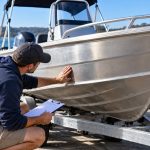
Look at the quality of the welds, internal framing, transom design and how the hull is assembled. These features all contribute to the boat’s long-term durability.
Layout
Think about the way you fish.
Some anglers need a large casting deck and plenty of rod storage. Others want comfortable seating, live bait tanks or enough room for family members. The best layout is the one that matches the way you’ll use the boat most often.
Trailer package
The trailer shouldn’t be an afterthought.
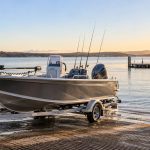
A well-matched trailer makes towing, launching and retrieving much easier, particularly if you’re travelling long distances or launching on different ramps.
Leading Plate Aluminium Boat Builders in Australia

Australia has several manufacturers with strong reputations for building quality plate aluminium fishing boats. While each brand has its own design philosophy, there are a few names that are consistently recognised by anglers.
Sea Raider
Sea Raider builds plate aluminium fishing boats for Australian conditions, with a focus on strength, practical fishing layouts and offshore capability. Their range uses marine-grade aluminium, fully welded construction and deep-V hulls designed for anglers who regularly fish beyond sheltered waters.
Bar Crusher
Bar Crusher is well known for its offshore fishing boats and has built a reputation around heavy-duty plate aluminium construction. The company places a strong emphasis on hull design, structural strength and ride quality, making its boats a popular choice among offshore anglers.
Formosa
Formosa offers a wide range of plate aluminium boats designed for both fishing and family boating. Their construction focuses on heavy-duty plate hulls, reinforced internal framing and practical layouts suited to different styles of boating.
Stabicraft
Although built in New Zealand, Stabicraft boats are widely available in Australia. Their distinctive chambered hull design is recognised for excellent buoyancy and stability, making them popular with anglers who value safety and confidence on the water.
Extreme Boats
Extreme Boats also come from New Zealand and are designed with offshore performance in mind. Their plate aluminium construction, deep-V hulls and quality finish have made them a respected option for anglers who regularly fish coastal waters.
Which Plate Boat Is Right for You?
The best plate aluminium fishing boat isn’t necessarily the most expensive or the one with the longest list of features.
If you mainly fish offshore, a heavier hull with a deep-V design may be the right fit.
If you spend more time in bays, estuaries or inland waterways, a smaller and lighter plate boat may better suit your needs.
Taking the time to compare build quality, layout, hull design and after-sales support will usually lead to a better decision than focusing on price alone.
A quality plate aluminium boat is a significant investment, but choosing one that’s matched to the way you fish can provide years of reliable service on Australian waters.
Frequently Asked Questions
For many anglers, yes. Plate aluminium boats generally cost more than pressed aluminium boats because they use thicker marine-grade aluminium and welded construction. If you regularly fish offshore or want a boat designed for long-term durability, many owners consider the extra investment worthwhile.
A plate aluminium boat is built from thicker aluminium plates that are cut and welded together. A pressed aluminium boat is formed from thinner aluminium sheets using large presses. Plate boats are typically stronger and better suited to offshore conditions, while pressed boats are often lighter and more affordable for use on rivers, lakes and sheltered waters.
Many Australian manufacturers use 5083 marine-grade aluminium because it offers excellent strength and corrosion resistance in saltwater environments. It has become one of the most commonly used materials for quality plate aluminium boats.
Yes. Plate aluminium boats are designed to handle tougher conditions than many lighter boats. Features such as deep-V hulls, welded construction and reinforced internal framing make them a popular choice for offshore fishing around Australia’s coastline.
A well-built plate aluminium boat can provide many years of reliable service when it’s properly maintained. Regular cleaning, servicing and checking the hull after each trip can help extend its lifespan.
Compared with many other boat types, plate aluminium boats are relatively easy to maintain. Washing the boat after saltwater use, servicing the motor and trailer, and inspecting the hull and welds regularly are the main maintenance tasks.
The right size depends on where and how you fish. Smaller boats are often suitable for estuaries, rivers and bays, while larger boats usually provide a more comfortable ride offshore and offer extra storage, deck space and fuel capacity.
Look beyond the advertised specifications. Compare hull design, build quality, aluminium grade, internal structure, deck layout, storage, trailer package, warranty and dealer support. Choosing a boat that suits your fishing style and the conditions you fish most often is usually more important than choosing the one with the longest features list.