Aluminium boats are a popular choice for Australian anglers, and it is easy to understand why. They are strong for their weight, relatively easy to tow, durable in demanding conditions and well suited to everything from rivers and estuaries to coastal and offshore fishing.
But there is a common misconception that aluminium cannot corrode.
It can. While aluminium does not rust like steel, it can experience several forms of corrosion when exposed to saltwater, incompatible metals, trapped moisture and electrical currents. The good news is that a well-built aluminium boat, combined with sensible maintenance, can provide many years of reliable service.
Understanding aluminium boat corrosion, what causes it and how to prevent it is therefore an important part of owning an aluminium fishing boat.
Do aluminium boats corrode?
Yes, aluminium boats can corrode. The important distinction is that aluminium does not develop rust in the same way as iron or steel. When aluminium is exposed to oxygen, it naturally develops a very thin layer of aluminium oxide. This oxide layer adheres closely to the surface and helps protect the metal underneath from further oxidation.
This natural resistance is one reason aluminium is so widely used in marine construction. However, the protective oxide layer does not make an aluminium boat immune to corrosion. Saltwater, electrical currents and contact with certain other metals can interfere with that protection and create conditions where corrosion becomes more aggressive.
The biggest concern for boat owners is usually not the normal oxidation that occurs on exposed aluminium. It is localised corrosion, particularly galvanic, crevice and electrolytic corrosion.
Why does aluminium corrode?
Corrosion is an electrochemical process. It becomes more complicated on a boat because the hull is surrounded by water and often connected to a variety of other metals and electrical components. Several factors can contribute to aluminium boat corrosion.
Saltwater exposure
Saltwater is an effective electrolyte, which means it can help electrical and chemical reactions take place between different metals. This does not mean aluminium boats cannot be used in saltwater. Aluminium can perform very well in marine environments when the boat is properly designed and maintained. However, regular saltwater exposure makes good maintenance even more important. Salt, dirt and other contaminants can remain on the hull after a fishing trip. Leaving these deposits in place for extended periods can increase the risk of corrosion. One of the simplest preventative measures is also one of the most effective: rinse the boat thoroughly with fresh water after using it in saltwater. For Australian boat owners who regularly fish offshore, this should become part of the normal post-trip routine.
Galvanic corrosion
Galvanic corrosion is one of the most important types of corrosion for aluminium boat owners to understand. It can occur when two dissimilar metals are electrically connected while exposed to an electrolyte such as seawater. The metals have different electrochemical properties, and one metal can become more susceptible to corrosion. Aluminium is relatively active in the galvanic series, which means it can be vulnerable when connected to less active metals such as copper or certain copper-containing alloys. This becomes particularly relevant when owners add hardware, fittings, electrical equipment or other accessories to their boats. For example, installing an incompatible metal fitting directly against aluminium without proper isolation can create a pathway for galvanic corrosion.
The solution is not to avoid all other metals. Modern boats contain many different materials. Instead, suitable materials should be selected and electrically isolated where necessary.
Crevice corrosion
Another problem is crevice corrosion. This can occur in areas where moisture becomes trapped and cannot easily escape or dry. Small gaps around fittings, brackets, joints and other components can create localised environments where corrosion develops. This is one reason good aluminium boat construction is about more than simply choosing the right alloy. Drainage and access matter too. A boat designed to allow water to drain away is less likely to develop persistent moisture problems than one with numerous enclosed areas where water can sit. When inspecting an aluminium boat, pay particular attention to areas where water, dirt or salt can accumulate.
Electrolytic corrosion and stray currents
Electrical systems can also play a role in corrosion. Stray electrical currents can accelerate corrosion of metal components, particularly when a boat is sitting in conductive water. Problems can arise from incorrect wiring, poor grounding or unsuitable electrical equipment. This is sometimes referred to as electrolysis, although the exact mechanism can vary depending on the circumstances. If corrosion appears unusually concentrated around underwater fittings, electrical components or particular parts of the hull, simply cleaning the affected area may not solve the underlying problem. The electrical system should be inspected by a suitably qualified marine professional. Boat owners should also be cautious about using inappropriate chargers or electrical equipment. Sea Raider warns against using automotive battery chargers aboard aluminium boats because of the potential corrosion risks associated with electrical systems.
Can aluminium boats handle saltwater?
Yes. Aluminium boats are used extensively in saltwater environments, including fishing and commercial applications. The key is understanding that corrosion resistance does not mean corrosion immunity. A properly constructed aluminium boat can handle marine conditions very well, but owners still need to consider saltwater exposure, hardware compatibility, electrical systems, coatings and drainage. The aluminium itself is only one part of the equation.
How the hull is designed, how fittings are installed and how the boat is maintained all influence its long-term condition.
What does aluminium boat corrosion look like?
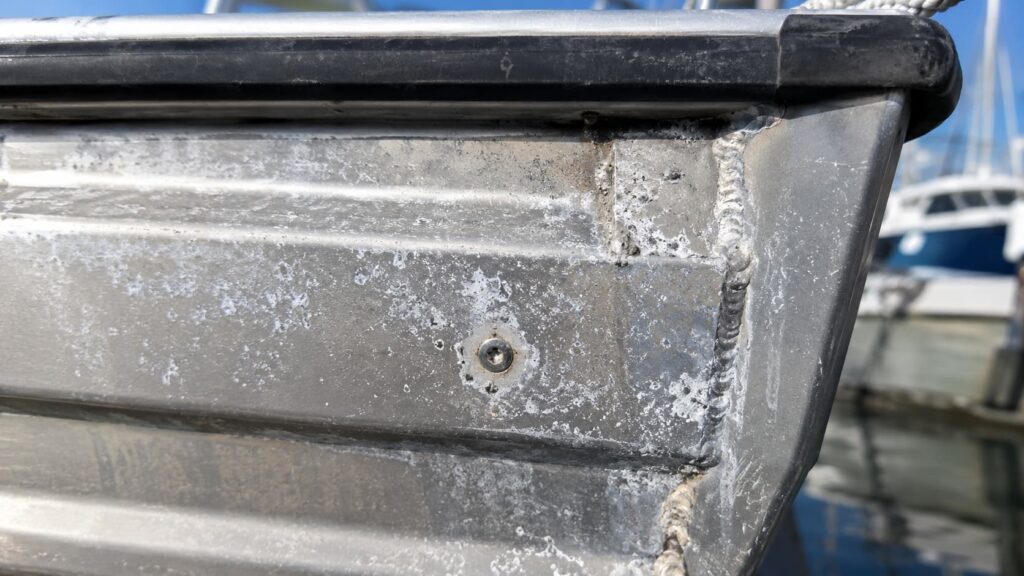
Aluminium corrosion does not necessarily look like the flaky red rust you might associate with steel.
Common warning signs include:
- White or grey powdery deposits
- Pitting in the aluminium
- Discolouration around fittings
- Corrosion around bolts and fasteners
- Blistering or lifting paint
- Damage around brackets or joins
- Corrosion in areas where water remains trapped
- Unusual deterioration around underwater fittings
A little surface oxidation does not automatically mean the hull is in trouble. Aluminium naturally forms an oxide layer. The concern is when you see persistent or localised corrosion, particularly deep pitting or deterioration around structural areas. If corrosion appears to be penetrating the metal, the boat should be professionally inspected.
How to prevent aluminium boat corrosion
Preventing corrosion starts with good construction and continues with good ownership habits.
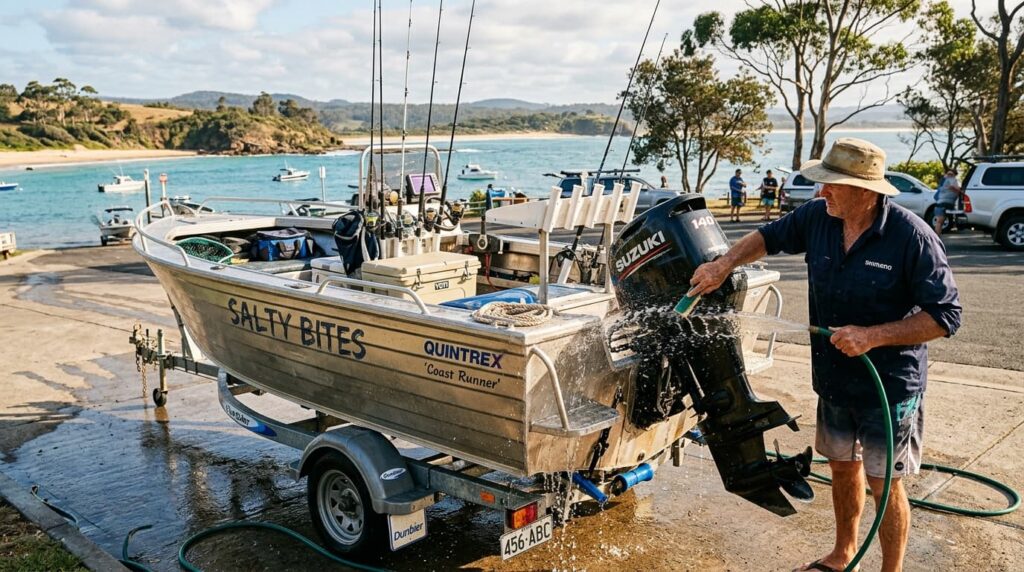
1. Rinse the boat after every saltwater trip
If there is one maintenance habit every aluminium boat owner should develop, it is rinsing the boat with fresh water. Saltwater can remain in corners, around fittings, inside compartments and on the trailer after a trip. A thorough freshwater wash removes salt and other contaminants before they have an opportunity to remain on the aluminium for extended periods.
Pay attention to areas that are easy to overlook, including:
- Around the transom
- Under and around fittings
- Inside storage areas
- Bilge areas
- Trailer contact points
- Under seats and removable equipment
- Around brackets and fasteners
2. Use the right sacrificial anodes
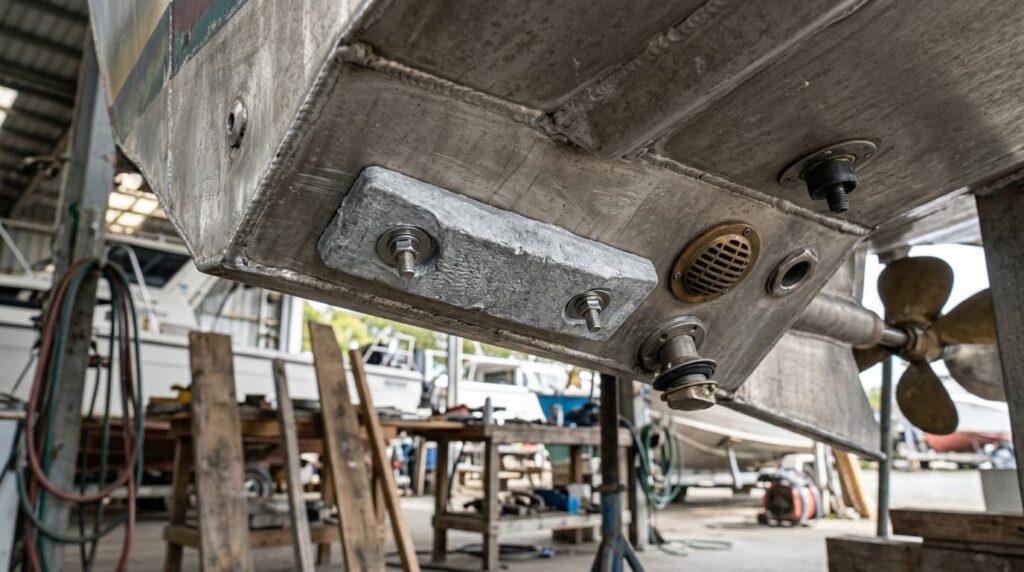
Sacrificial anodes are an important part of corrosion protection. The basic principle is straightforward. The anode is designed to corrode preferentially, helping protect the metal components it is connected to. However, anodes only work properly when they have a good electrical connection to the metal they are protecting.
They should also not be painted.
Inspect them regularly and replace them when they have deteriorated sufficiently. Sea Raider recommends regular inspection because an anode that is not wearing at all may not be providing the expected protection. It is also important not to assume that adding more anodes is always better. Aluminium can be overprotected, so anode selection and installation should follow appropriate marine guidance.
3. Keep dissimilar metals isolated
When adding equipment or accessories to your boat, think about what materials are being introduced. Aluminium, stainless steel, copper, brass and other metals can behave differently in a marine environment. Where dissimilar metals need to be used together, proper electrical isolation can help reduce galvanic corrosion. Depending on the application, this can involve plastic washers, isolation pads or suitable marine bedding compounds. It is recommended to use aluminium or appropriate 300-series stainless steel fittings and fasteners, together with plastic washers where necessary.
4. Be careful with antifouling paint
Antifouling is another area where aluminium boat owners need to be careful. Many traditional antifouling paints contain copper. Copper can cause galvanic corrosion when it comes into contact with aluminium. For this reason, aluminium hulls should use an antifouling system specifically designed and approved for aluminium. Sea Raider highlights the importance of using copper-free antifouling products on aluminium hulls. Never assume that an antifouling product suitable for a fibreglass or steel boat is automatically suitable for aluminium. Always check the manufacturer’s compatibility requirements before applying a coating.
5. Repair scratches and damaged coatings
Fishing boats have a tough life. Launching, retrieving, beaching and general use can all result in scratches or damage to coatings. A scratch does not necessarily mean the hull has been compromised, but damaged protective coatings should not simply be forgotten. Inspect the area and repair it using a coating system designed for aluminium. If the damage is extensive or corrosion has already started, get professional advice before attempting a repair.
6. Keep the boat clean and dry
Regular cleaning does more than improve the boat’s appearance. It also makes inspections easier. A clean hull allows you to spot white deposits, pitting, damaged coatings and corrosion around fittings before the problem becomes more difficult to address. When the boat is stored, make sure water can drain properly. Avoid situations where moisture becomes trapped against the aluminium for long periods. We specifically highlight the importance of designing and maintaining aluminium boats so that water does not become trapped in crevices, channels and enclosed areas.
How should you maintain an aluminium fishing boat?
A simple maintenance routine can go a long way.
After every saltwater trip
Give the boat a thorough freshwater rinse. Wash away salt, mud, fish residue and other contaminants. Flush areas where saltwater may have collected.
Every few trips
Inspect the hull and fittings.
Look for:
- White powdery deposits
- Pitting
- Damaged paint
- Loose fittings
- Corrosion around bolts
- Problems around brackets
- Damaged electrical connections
Regularly
Inspect sacrificial anodes and replace them when necessary. Check the electrical system and look for signs of unusual corrosion. If the boat spends extended periods in the water, pay particular attention to the underwater hull and fittings.
During servicing
Have important components inspected by an experienced marine professional. A professional inspection can identify problems that may not be obvious during a quick wash or visual check.
What should you look for when buying a used aluminium boat?
If you are considering a second-hand aluminium boat, corrosion should be part of your inspection. Start with the hull. Look for obvious pitting, patches, damaged coatings and unusual discolouration. Then inspect welds, brackets, fasteners and areas around fittings. Check areas where water may have been trapped.
Also look at the condition of the sacrificial anodes. Extremely worn anodes can indicate normal corrosion protection at work, while anodes that appear almost untouched may warrant further investigation. The boat’s electrical system is also worth checking, particularly if the vessel has spent considerable time in saltwater.
A professional inspection is worthwhile if you find significant corrosion or are unsure about the condition of the hull.
Can aluminium boat corrosion be repaired?
In many cases, yes.
The appropriate repair depends on how far the corrosion has progressed. Light surface oxidation may be dealt with through appropriate cleaning and surface treatment. More serious pitting requires closer inspection. If corrosion has reduced the thickness of the aluminium or affected structural areas, repairs may involve removing damaged material and carrying out specialist aluminium welding or replacement.
Do not simply paint over significant corrosion. A coating may hide the problem without addressing the underlying cause. If you see deep pitting, corrosion around welds or damage to structural components, have the boat assessed by someone experienced with aluminium boat construction and repair.
Sea Raider Boats and corrosion-resistant construction
For Australian anglers, the quality of the boat itself is an important part of the corrosion equation. Sea Raider Boats builds its plate alloy boats using DNV 5083 marine-grade aluminium and manufactures its range in Queensland. Its Pro Fisher models are designed around demanding fishing applications, including offshore use.
For example, the Sea Raider 6.25m Pro Fisher is constructed from 6mm 5083 marine-grade aluminium and features a foam-filled hull designed for durability and offshore performance. Choosing appropriate marine-grade aluminium is an important starting point, but no aluminium boat is maintenance-free. Even a robustly constructed boat needs to be rinsed after saltwater use, checked regularly and protected from galvanic and electrical corrosion.
For anglers moving between Australian rivers, estuaries and offshore waters, the combination of suitable marine-grade materials, strong construction and sensible maintenance can help keep an aluminium fishing boat performing well for years to come.
How long does an aluminium boat last?
There is no single lifespan that applies to every aluminium boat.
How long a boat lasts depends on several factors, including:
- The aluminium alloy used
- Hull construction
- Welding quality
- How frequently the boat is used
- Whether it is used in freshwater or saltwater
- Exposure to galvanic corrosion
- Electrical systems
- Storage conditions
- Maintenance
A well-built aluminium boat that is properly maintained can provide many years of service. In contrast, neglecting corrosion, leaving salt deposits on the hull or installing incompatible hardware can create problems much sooner. The best approach is therefore not to focus on a specific number of years. Focus on preventing corrosion and identifying problems early.
Aluminium boat corrosion: a simple maintenance checklist
If you want to keep things simple, use this checklist:
After saltwater use:
- Rinse the boat thoroughly with fresh water.
- Clean away salt, mud and fishing debris.
- Allow water to drain from compartments and low points.
- Check for obvious damage.
Regularly:
- Inspect the hull for pitting and white deposits.
- Check fittings and fasteners.
- Inspect sacrificial anodes.
- Look around brackets and electrical components.
- Check areas where water can become trapped.
When adding equipment:
- Check whether the materials are compatible with aluminium.
- Isolate dissimilar metals where required.
- Use appropriate marine fasteners.
- Check the manufacturer’s recommendations for coatings and sealants.
When applying antifouling:
Use a product specifically designed for aluminium and avoid copper-based products unless the manufacturer specifically confirms compatibility.
Frequently Asked Questions
No, aluminium does not rust in the same way as steel or iron. It develops a protective oxide layer when exposed to oxygen. However, aluminium can still corrode, including through galvanic and crevice corrosion.
Aluminium is naturally corrosion resistant, but corrosion can occur when the boat is exposed to saltwater, incompatible metals, trapped moisture or electrical problems. Good construction and regular maintenance significantly reduce the risk.
Yes. Aluminium boats are widely used in saltwater environments. Regular freshwater rinsing, suitable hardware, correct anodes and appropriate coatings are important for long-term protection.
The main causes include saltwater exposure, galvanic corrosion, crevice corrosion, stray electrical currents, incompatible metals and unsuitable coatings.
Rinse the boat with fresh water after saltwater use, keep it clean, inspect sacrificial anodes, isolate incompatible metals, maintain electrical systems and use coatings designed for aluminium.
Copper-based antifouling can create galvanic corrosion problems with aluminium. Use an antifouling product specifically designed and approved for aluminium hulls.
If the boat has been used in saltwater, rinsing it with fresh water after every trip is a sensible practice. Pay particular attention to areas where saltwater and debris can collect.
Many aluminium boats use sacrificial anodes to help protect underwater metal components. They need to be correctly installed, electrically connected and inspected regularly. They should not be painted.
Common signs include white or grey powdery deposits, pitting, staining around fittings, blistering coatings and deterioration around fasteners or brackets.
Yes, depending on its severity. Surface oxidation can often be treated, while deeper pitting or structural corrosion may require specialist assessment and aluminium welding or replacement.
Yes. Sea Raider states that it uses DNV 5083 marine-grade aluminium for its plate alloy boats. Its Pro Fisher range is designed for fishing applications including offshore use.
Final thoughts
Aluminium boats are not completely immune to corrosion, but that does not make them a poor choice for Australian waters. In fact, their combination of strength, relatively low weight and durability makes aluminium particularly well suited to many Australian fishing conditions. The key is understanding what causes corrosion. Saltwater itself is not necessarily the enemy. The bigger issue is what happens when saltwater is combined with dissimilar metals, poor electrical systems, trapped moisture or unsuitable coatings. Good maintenance is therefore straightforward but important. Rinse the boat after saltwater use, keep the hull clean, inspect anodes, check fittings and deal with scratches or corrosion before they become larger problems.
For anyone considering an aluminium fishing boat, construction quality matters too. Starting with a properly designed boat made from suitable marine-grade aluminium provides a strong foundation. From there, consistent care can help protect that investment and keep you on the water for many seasons to come.