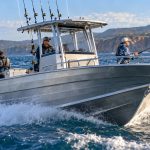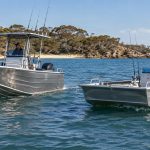
If you are looking at buying an aluminium boat, one of the first questions you will probably ask is, “How many people can it carry?” It sounds like a straightforward question, but there is no single answer based purely on the length of the boat. A 5 metre aluminium boat may have a very different passenger capacity to another boat of the same length, while two boats with similar dimensions can have different ratings depending on their hull design, beam, freeboard, flotation, weight and intended use. For Australian boat owners, the most important number to check is the maximum person capacity shown on the boat’s Australian Builders Plate (ABP), manufacturer’s compliance plate or approved capacity label. This rating is determined for the particular vessel and its intended operating conditions, so it should always take priority over general rules of thumb. If you are choosing an aluminium fishing boat for family trips, offshore fishing or regular weekends on the water, understanding passenger capacity is just as important as looking at hull thickness, engine size, deck layout and overall boat size.
How Many People Can an Aluminium Boat Carry?
An aluminium boat can carry anywhere from a couple of people to a much larger crew, depending on its size, design and rated capacity. Smaller aluminium boats may be designed for two to four people, while boats around 5 to 6 metres can accommodate several passengers. Larger offshore aluminium boats can be rated for eight, ten or more people. These are only broad examples, however, and you should never determine the safe capacity of a boat simply by measuring its length. The Australian Builders Plate provides much more useful information because it can show the maximum number of persons, maximum mass of persons, maximum load, maximum engine power and other important safety information. This distinction matters because carrying five lightweight passengers is not the same as carrying five adults plus fishing equipment, fuel, batteries, ice and other gear. The number of people a boat can physically fit is therefore not necessarily the same as the number it is designed or rated to safely carry.
What Determines the Passenger Capacity of an Aluminium Boat?
Several factors are taken into account when determining how many people an aluminium boat can safely carry. Boat length is obviously important because a longer hull generally provides more usable space and greater displacement, but it is only one part of the equation. Beam, which is the width of the boat, has a major influence on stability and usable deck space, while freeboard helps determine how much reserve height the hull has above the water. Hull shape and configuration are also important because different designs behave differently when loaded. A deep-V offshore fishing boat, centre console and enclosed cabin boat can have very different characteristics even when they are similar in length. Flotation, internal structure, seating arrangements and weight distribution all play a role as well. The maximum load is another important consideration because passenger capacity is not the same thing as total carrying capacity. Depending on the vessel, the overall load can include people, the outboard motor, fuel, batteries, fishing tackle, safety equipment, tools and other gear. This is why simply counting available seats is not an adequate way to determine how many people you should take onboard.
Check the Australian Builders Plate Before You Load the Boat
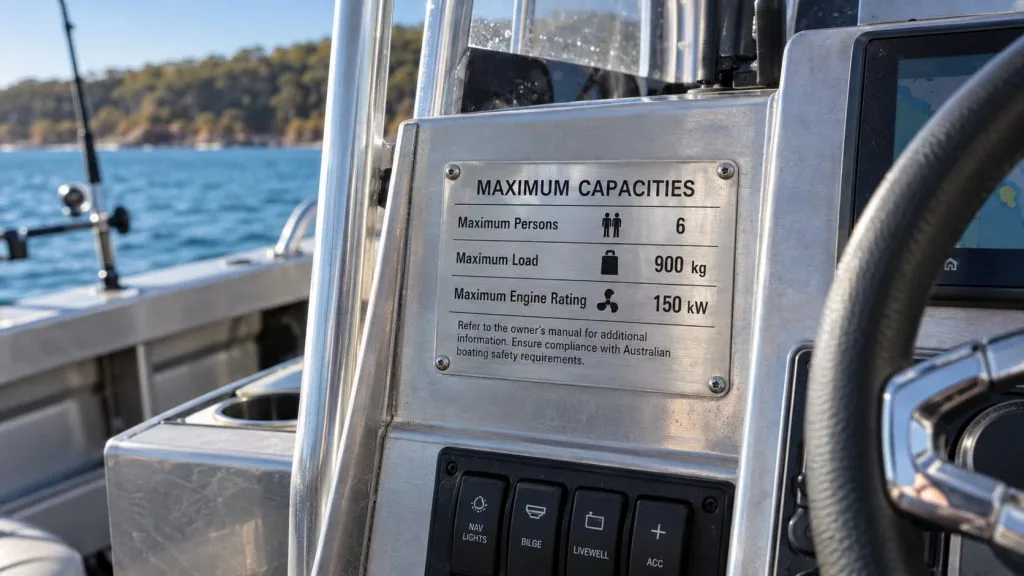
The Australian Builders Plate is one of the most useful references when determining boat capacity in Australia. For applicable recreational vessels, the plate provides important information about the vessel’s operating limits and can include the maximum number of persons, maximum weight of persons, maximum load capacity and maximum engine power, along with other relevant safety information. The maximum person rating should not be treated as a suggestion that can simply be exceeded when conditions look good. If an aluminium fishing boat is rated for six people, taking eight people because everyone can physically fit onboard does not make it an eight-person boat. The same applies to weight. A boat may have a stated maximum number of people as well as a separate maximum mass of people, and both figures need to be considered. If you are buying a new or used aluminium boat, locating the Australian Builders Plate should be part of your normal inspection process because it can tell you far more about the vessel’s intended capacity than its advertised length alone.
Maximum People and Maximum Load Are Different
One of the easiest mistakes to make when researching aluminium boat capacity is assuming that the maximum number of people is the only loading figure that matters. Imagine that a boat is rated for six people. That does not necessarily mean you can put six adults onboard, fill the fuel tank, load several large eskies, bring multiple tackle boxes, carry extra batteries and add a substantial amount of fishing equipment without thinking about the overall weight. People and equipment can quickly add up, particularly on a fishing trip where it is common to carry rods, tackle, bait, ice, fuel, anchors, safety equipment and electronics. The weight of all these items contributes to how heavily the boat is loaded, so you need to consider the complete load rather than simply counting passengers. A boat that is within its maximum passenger number can still be poorly loaded if too much equipment is carried or the weight is concentrated in the wrong areas.
Does Boat Length Determine How Many People It Can Carry?
No, boat length alone does not determine passenger capacity. Length is useful when comparing vessels, but it should never be used as a standalone passenger capacity calculator. Two 6 metre aluminium boats can have different beam measurements, hull shapes, deck arrangements, weights and capacity ratings. One might be designed primarily for sheltered-water fishing, while another may have a deeper hull, greater freeboard and a different configuration intended for offshore use. This is why there is no reliable universal rule such as “one person per metre” that can be applied to every aluminium boat. Some Australian authorities provide capacity tables for vessels where an appropriate plate is not available, but these calculations apply to specific circumstances and conditions. For a boat you are considering purchasing, the manufacturer’s stated capacity and Australian Builders Plate should always be the first places to look.
How Many People Can a 4m Aluminium Boat Carry?
A 4 metre aluminium boat will generally have a much smaller passenger capacity than a larger offshore boat, but the exact number still depends on the individual vessel. Smaller boats typically have less deck space, lower freeboard and less overall capacity for passengers and equipment, which means careful loading becomes particularly important. Depending on the vessel’s design and applicable capacity requirements, a boat around this size may be suitable for a small group rather than a large crew. However, you should not assume that every 4 metre aluminium boat has the same rating. A small fishing boat with limited freeboard and a narrow beam can have a different capacity from a wider, differently configured vessel of the same length. Always check the individual boat’s manufacturer’s specifications or Australian Builders Plate before deciding how many people to carry.
How Many People Can a 5m Aluminium Boat Carry?
A 5 metre aluminium boat can potentially carry several people, but the exact number depends on its design, configuration and rated capacity. At this size, there can be significant differences between boats designed for different purposes. An open fishing boat, for example, may have a different passenger capacity from a more heavily built boat with a larger beam, greater freeboard or a different internal layout. It is also important to think about what you normally carry on a typical trip. If five people are onboard with fishing rods, tackle, fuel, batteries, eskies and other equipment, the total load can be substantially greater than five people travelling with minimal gear. Capacity should therefore always be considered in terms of both people and total weight rather than passenger numbers alone.
How Many People Can a 6m Aluminium Boat Carry?
Once you get into the 6 metre range, aluminium boats can offer considerably more deck space, stability and carrying capacity, but there is still no universal passenger number. Sea Raider provides a useful example of how capacity can vary across different models. The 6.25m Pro Fisher has a maximum person capacity of five, while larger models in the range are rated for more passengers. This demonstrates why boat length alone does not tell the full story. The hull’s beam, configuration, weight, layout and intended use all contribute to the final rating. When comparing 6 metre aluminium fishing boats, it is therefore worth looking beyond the headline length and checking the manufacturer’s specifications, maximum person rating and maximum load.
How Many People Can a 7m Aluminium Boat Carry?
A larger 7 metre class aluminium boat can provide significantly more room for passengers, fishing gear and equipment, but capacity still varies between individual designs. Some boats in this size range may be rated for six to eight people, while larger or differently configured vessels may have different ratings. Sea Raider’s 7.5m Pro Fisher, for example, has a maximum person capacity of eight, a 2.45 metre beam and a 1.45 metre hull depth, with a published hull-only dry weight of 1,700 kg. These specifications help illustrate how a larger hull can provide additional carrying capacity, but the published passenger rating should still be considered alongside the boat’s maximum load, fuel, equipment and the conditions in which you intend to operate. If you regularly fish with a larger group, these details can be just as important as the overall length of the boat.
Why Offshore Conditions Can Reduce Practical Capacity
A boat’s maximum capacity is not necessarily the number of people you should carry in every situation. Capacity ratings are established around particular operating conditions, and when conditions become rougher, the safe practical load can decrease. This is particularly important for aluminium fishing boats used offshore because larger waves, stronger winds and changing sea conditions can affect the way a loaded boat behaves. A vessel that feels comfortable on calm water can become much less comfortable when heavily loaded in rough conditions, particularly if passengers and equipment are not evenly distributed. Australian boating safety guidance recommends reducing the load when operating in rougher conditions or on open water, with some state guidance recommending a reduction in the number of people by about one third in adverse weather or on the open sea. This should not be interpreted as a universal rule that every boat must automatically reduce its capacity by exactly one third whenever it leaves sheltered water. Instead, it highlights an important principle: conditions matter. If the forecast deteriorates, carrying fewer people and less equipment can provide a greater margin of safety.
Passenger Weight and Equipment Matter
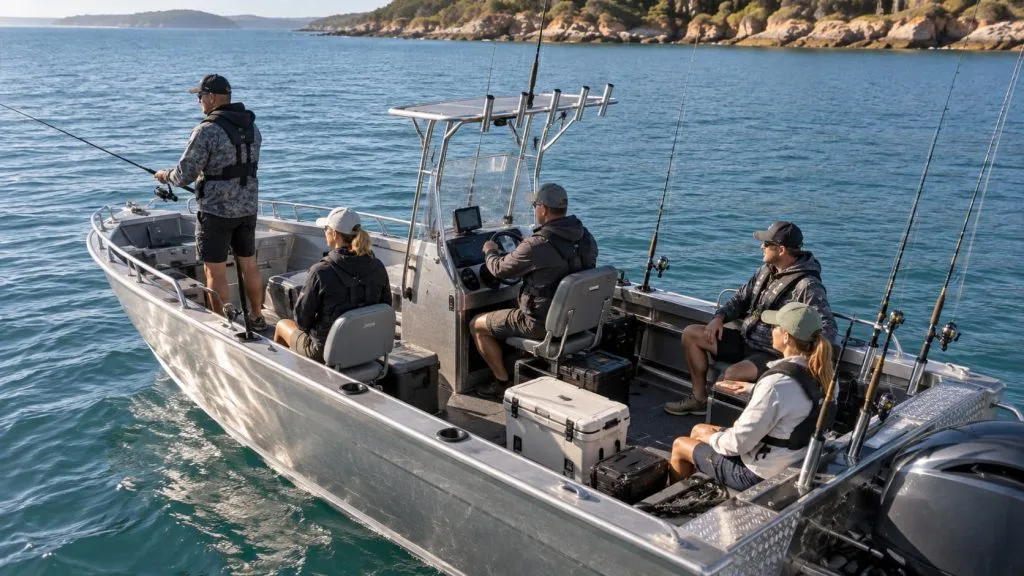
A boat with six people onboard can behave very differently depending on who those six people are and what they bring with them. Consider a typical fishing trip where you might have six passengers, a large outboard, several batteries, fuel, fishing rods and tackle, ice and eskies, bait, an anchor and chain, safety equipment, electronics, personal bags and additional fishing equipment. All of these items contribute to the boat’s loading. Weight distribution also matters because heavy equipment should be secured and positioned appropriately rather than concentrated in one area of the boat. Poor weight distribution can affect trim and handling even when the total load is technically within the rated limit. Passengers should also be aware that their movements can affect stability, particularly on smaller boats. If several people move suddenly to one side of a boat, the centre of weight changes, which can have a noticeable effect on the vessel’s stability. Taking a few minutes to think about where passengers and equipment will be positioned before leaving the ramp can make a meaningful difference to how the boat handles.
What Happens If You Overload an Aluminium Boat?
Overloading any boat can create serious handling and stability problems, regardless of whether the hull is made from aluminium or another material. As additional weight goes onboard, freeboard can decrease, meaning there is less distance between the water and the top of the hull. The boat can become more susceptible to taking water over the sides or transom, particularly when waves are present, while excessive loading can also affect stability, acceleration, steering and general handling. In serious situations, overloading can contribute to swamping or capsizing. An aluminium hull does not remove these risks. Plate aluminium can provide a strong and durable hull structure, but the vessel still has a defined capacity and operating limit. Hull strength and passenger capacity are related, but they are not the same thing. A strong aluminium hull can still be overloaded, and exceeding the boat’s rated capacity is never a sensible way to get more people or equipment onboard.
Aluminium Boat Capacity: What About Sea Raider?
Sea Raider builds a range of plate aluminium boats in different sizes and configurations, so passenger capacity varies across the range. For example, the 6.25m Pro Fisher has a maximum person capacity of five, a 2.20 metre beam and is built from 5083 marine-grade aluminium, with 6mm bottom plate, 4mm topsides and a 5mm transom. Moving up to the 7.5m Pro Fisher, the published maximum capacity increases to eight people. It has a 2.45 metre beam and uses 6mm bottom plate, 5mm topsides and a 6mm transom. At the larger end of the range, the 9.6m Pro Fisher is rated for up to 10 people, with a 3 metre beam and a hull-only dry weight of approximately 3,200 kg. It uses 6mm bottom plate, 5mm topsides and an 8mm transom. These examples show how passenger capacity increases across different boat sizes and configurations, but they also reinforce the point that capacity is not determined simply by the length of the hull. Each Sea Raider model has its own specifications and intended use, so buyers should consider the complete package, including passenger capacity, maximum load, layout and operating conditions, rather than focusing on one number.
How to Work Out the Right Passenger Capacity for Your Boat
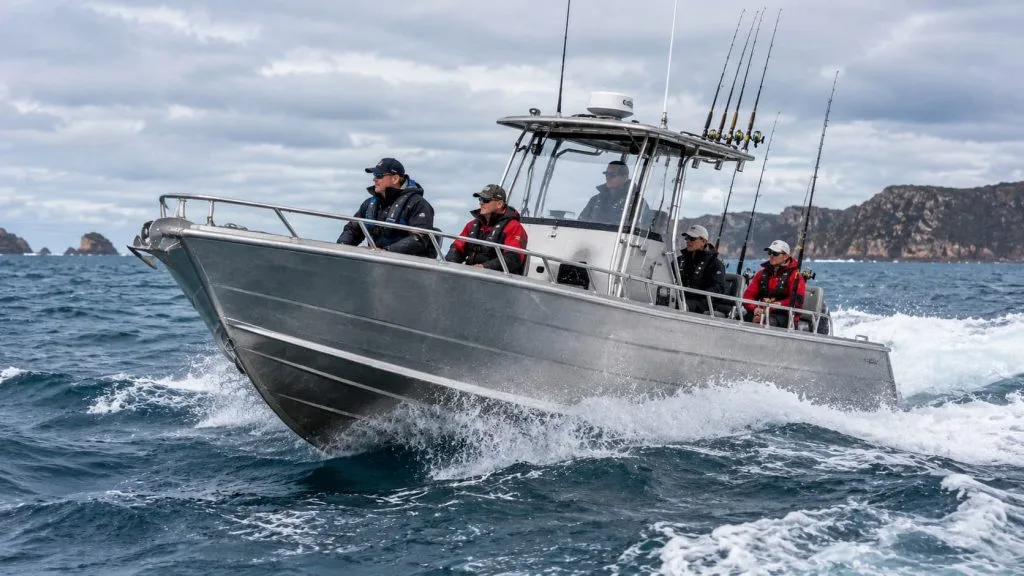
If you are buying an aluminium boat, start with the manufacturer’s specifications and Australian Builders Plate, then think about how you will actually use the boat. If your usual trip involves two adults and a child, you may not need the same boat as someone regularly taking six adults offshore with a full load of fishing equipment. Before heading out, check the maximum number of people shown on the Australian Builders Plate, check the maximum mass of people, consider the maximum overall load, account for the weight of fuel and equipment, make sure heavy equipment is secured and distributed appropriately, and consider the forecast and expected sea conditions. If conditions are rough or exposed, reducing the practical load can provide an additional safety margin. Most importantly, never assume that extra deck space automatically means extra passenger capacity. The right boat is the one that comfortably suits the people, equipment, waterways and conditions you actually plan to encounter.
Frequently Asked Questions About Aluminium Boat Capacity
It depends on the individual boat. Passenger capacity is determined by factors including hull design, dimensions, stability, flotation and loading requirements. Always check the Australian Builders Plate or manufacturer’s specified capacity before taking passengers onboard.
No. Length is only one factor. Beam, hull design, weight, freeboard, flotation and the boat’s intended operating conditions also influence passenger capacity. Two boats of the same length can have different maximum person ratings.
On applicable boats, check the Australian Builders Plate or manufacturer’s compliance plate. The plate should provide the maximum number of persons and may also specify the maximum mass of people and total load. If you are buying a used boat, make sure you can locate and read the relevant capacity information before purchasing.
Capacity rules for children can vary depending on the applicable Australian state or territory requirements and assessment method. Some Australian guidance allows children under a certain age to be counted differently from adults for capacity calculations. Always check the requirements applying to your vessel and the location where you intend to operate.
No. You should not simply exceed the maximum number of people because individual passengers weigh less. The manufacturer’s rated person capacity and maximum person mass both need to be considered. Passenger numbers and total load are separate considerations, and both need to remain within the applicable limits.
Yes. Equipment contributes to the overall load of the boat. Fishing tackle, ice, bait, batteries, fuel, safety equipment and other gear can add significant weight, so they should be considered when planning how heavily the boat will be loaded. This is especially important on longer fishing trips where additional fuel and equipment are often carried.
The maximum rated capacity should not automatically be treated as the ideal offshore load. Rougher conditions can require a reduction in practical loading, particularly when waves and wind increase. Always consider the weather, sea state, boat characteristics and your experience before heading offshore, and be prepared to reduce the number of people or amount of equipment if conditions require it.
Aluminium construction can provide a strong and durable hull, but passenger safety depends on the complete vessel design and how it is operated. A properly rated aluminium boat can be very capable, but it must still be loaded within its specified limits. Hull material alone does not determine passenger capacity or overall safety.
There is no universal number. Depending on the particular design, a 6 metre class aluminium boat could have a different rating from another boat of similar length. For example, Sea Raider’s 6.25m Pro Fisher is rated for five people. Always check the capacity rating of the specific vessel rather than relying on its length.
If you regularly fish with a larger group, a larger boat may provide more deck space, stability and carrying capacity. However, you should consider more than passenger numbers, including towing requirements, storage, engine size, fuel capacity, operating area and the conditions you expect to encounter. Choosing a boat based on how you normally use it is generally more useful than choosing one based solely on its maximum passenger number.
Final Thoughts
So, how many people can an aluminium boat carry? The answer is not simply determined by the boat’s length. The safest and most accurate answer comes from the boat’s Australian Builders Plate, manufacturer’s specifications and the conditions in which the boat will be operated. A small aluminium boat may be ideal for one or two anglers, while a larger offshore plate boat can accommodate a much bigger crew, but regardless of size, the number of people onboard needs to be considered alongside their weight, fuel, fishing equipment and other carried loads. If you are comparing aluminium fishing boats, don’t just count seats. Look at the maximum person capacity, maximum person weight, maximum load, hull dimensions and intended operating conditions. Most importantly, remember that a capacity rating is a safety limit, not a target that has to be reached on every trip. If conditions become rough, carrying fewer people and less equipment can give you a greater margin of safety.
Disclaimer
The information in this article is provided for general informational purposes only and should not be treated as legal, regulatory or professional boating advice. Boat capacity requirements and operating rules can vary between Australian states and territories and may change over time. Always check the Australian Builders Plate, manufacturer’s specifications and the current requirements of the relevant marine safety authority before operating your boat. When conditions are unsuitable, do not rely solely on the maximum capacity rating. Consider reducing the number of people and the overall load or postponing the trip. Sea Raider Boats does not provide legal or regulatory advice and accepts no responsibility for actions taken solely on the basis of information contained in this article.
Last reviewed: September 2026