How do I choose the right propeller for an aluminium fishing boat?
Choose a propeller that allows your outboard to reach the manufacturer’s recommended wide-open-throttle (WOT) RPM range when the boat is carrying its normal load. Start by checking the engine manual, then consider the propeller’s pitch, diameter, blade count and material. A lower-pitch propeller generally improves acceleration and helps a heavily loaded boat get onto the plane, while a higher-pitch propeller can favour top speed if the engine has enough power to turn it. Aluminium propellers are generally more affordable, while stainless steel options are stronger and can offer better performance. Always confirm the final selection with your engine manufacturer or a qualified marine mechanic.
Choosing the right propeller can make a noticeable difference to how an aluminium fishing boat performs. It affects acceleration, cruising speed, fuel use, engine RPM and how comfortably the boat gets onto the plane. Yet it is easy to overlook when buying a boat or replacing an existing propeller.
Some owners assume that a larger engine automatically means better performance, while others simply replace a damaged propeller with one that has the same appearance. Neither approach guarantees the right result. A propeller that does not suit the engine, hull and typical load can leave the boat struggling to accelerate or cause the outboard to operate outside its recommended RPM range.
This matters particularly on aluminium fishing boats, which can carry changing loads of passengers, fuel, fishing equipment, bait, ice and safety gear. The propeller needs to work with the boat as it is actually used, not just its empty weight. Here is what to consider before choosing one.
1. Understand How a Boat Propeller Works
An outboard propeller converts engine power into thrust by moving water backwards, which pushes the boat forwards. Its shape, size and pitch determine how effectively it transfers that power into the water.
Although propellers can look similar, small differences in their dimensions and design can change performance. A propeller that works well on a light runabout may not be suitable for a heavier plate aluminium fishing boat carrying several people and a full fuel tank.
The most important specifications to understand are diameter and pitch. Blade count, blade shape, material and other design features also influence how the propeller behaves.
2. What Do Propeller Pitch and Diameter Mean?
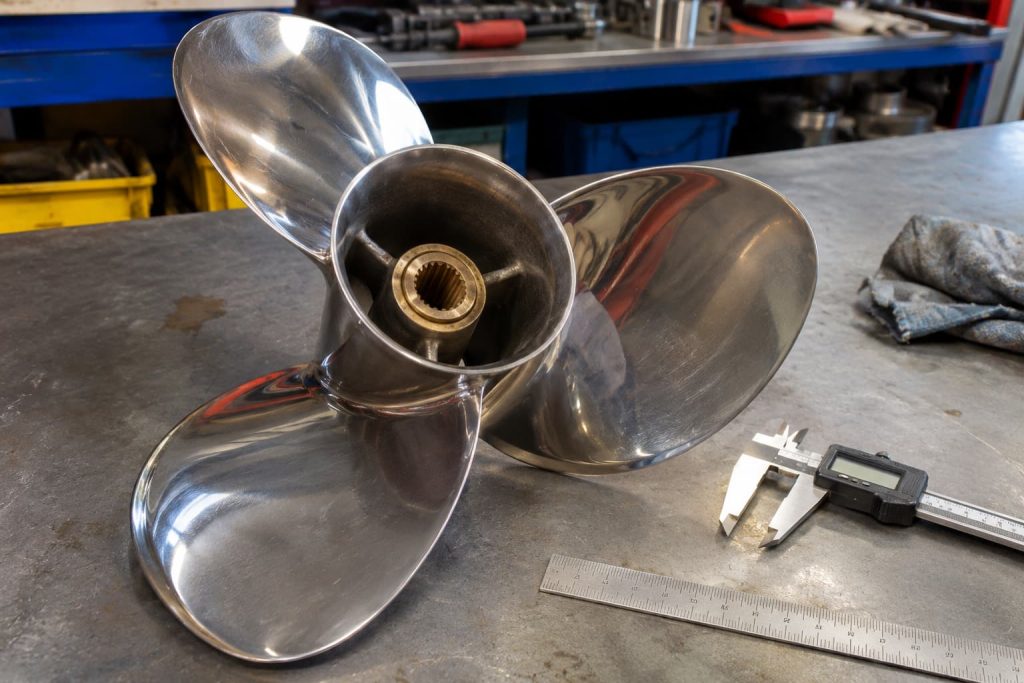
Propeller Pitch
Pitch describes the theoretical distance a propeller would move forwards in one complete revolution, assuming there were no slip. It is usually measured in inches and is one of the main factors used when matching a propeller to an outboard.
Think of pitch as the gearing in a vehicle. A higher-pitch propeller is similar to a higher gear. It can move the boat further with each revolution, but the engine needs enough power to turn it effectively. A lower-pitch propeller is more like a lower gear, allowing the engine to build RPM more easily and generally improving acceleration.
For example, if a boat struggles to get onto the plane with its normal fishing load and the engine cannot reach its recommended WOT RPM, the propeller may have too much pitch. A lower-pitch option may allow the engine to reach its intended operating range more easily.
However, reducing pitch is not automatically the answer to every performance problem. Engine height, trim, hull condition, load distribution and mechanical condition can also affect performance.
Propeller Diameter
Diameter is the distance across the circle formed by the rotating blade tips. It determines the overall size of the propeller and influences how much water it can move.
Diameter is usually selected within the limits of the outboard’s gearcase and propeller design. Unlike pitch, it is not always the main adjustment available to boat owners. The engine manufacturer or propeller supplier can help identify the suitable diameter for a particular engine.
When comparing propellers, remember that diameter and pitch work together. Do not choose one based on its number alone.
3. Why Wide Open Throttle RPM Is the Most Important Check
One of the most reliable ways to check whether a propeller is suitable is to measure the engine’s RPM at wide open throttle, commonly called WOT.
Every outboard has a manufacturer-specified WOT RPM range. The correct propeller should allow the engine to reach that range when the boat is operating under normal conditions and carrying its usual load.
If the engine cannot reach the lower end of its recommended range, the propeller may be too heavily loaded. Excessive pitch, an unsuitable propeller design, too much boat weight or an engine problem could be responsible. Running an engine continuously below its intended range can place unnecessary strain on it.
If the engine exceeds the upper end of its recommended range, the propeller may have too little pitch or otherwise be unsuitable. Over-revving can also damage the engine.
The correct RPM range varies between outboard models, so do not rely on a general figure found online. Check the owner’s manual for your exact engine.
How to Test Your Current Propeller
Take the boat out in safe, suitable conditions with a normal fishing load. Include the fuel, passengers and equipment you would usually carry. Once the engine has warmed up, trim the boat appropriately and record the maximum RPM achieved at full throttle, following the manufacturer’s operating instructions.
Compare the reading with the specified WOT range. If the result is outside the range, have the setup assessed before continuing to operate the engine at full throttle.
A propeller supplier or marine mechanic can use this information, along with the boat and engine details, to recommend a suitable adjustment. Do not make a large pitch change based on an approximate rule of thumb without testing the result.
4. Choosing Between a Three-Blade and Four-Blade Propeller
The number of blades affects how the propeller grips the water and transfers power. Three-blade and four-blade propellers are both common, but they suit different performance priorities.
A three-blade propeller is a popular general-purpose choice. It can provide a useful balance of acceleration, cruising performance and top speed, making it suitable for many recreational fishing boats.
A four-blade propeller may offer better grip, improved low-speed handling and stronger acceleration in some installations. It can be useful when a boat carries heavy loads or struggles to get onto the plane. It may also help a boat maintain planing speed at lower RPM, depending on the design.
There can be a trade-off in top speed, and a four-blade propeller is not automatically more efficient. The result depends on the engine, hull, propeller design and operating conditions.
For an aluminium fishing boat that regularly carries several passengers, fuel and fishing equipment, it is worth asking a propeller specialist whether a four-blade option could improve the way the boat performs under load.
5. Aluminium vs Stainless Steel Propellers
The two common propeller materials are aluminium and stainless steel. Both have advantages, and the right choice depends on how often you use the boat, your budget and the performance you expect.
Aluminium Propellers
Aluminium propellers are generally more affordable and are widely used on recreational outboards. They are a practical choice for everyday fishing, boating in familiar waters and owners who want a cost-effective replacement.
They are softer than stainless steel, so the blades can be more vulnerable to damage from submerged objects. However, that softer construction can sometimes mean the propeller absorbs more of an impact rather than transferring all the force to the gearcase. It does not guarantee protection from engine damage.
For many aluminium fishing boat owners, a correctly matched aluminium propeller provides suitable performance without the additional cost of stainless steel.
Stainless Steel Propellers
Stainless steel is stronger and more resistant to blade deformation than aluminium. This allows manufacturers to produce thinner blade profiles and designs that can maintain their shape under higher loads.
Depending on the application, a stainless steel propeller may improve acceleration, grip or top-end performance. It can also be more expensive, and an impact may transfer greater force through the propeller shaft and gearcase.
Stainless steel is worth considering if you use your boat regularly, want to improve a particular performance issue or need a propeller suited to demanding operating conditions. It is not automatically the best choice for every recreational fishing boat.
6. Consider Your Boat’s Weight and Typical Fishing Load
A propeller should be selected for the boat’s real operating weight. An aluminium fishing boat can carry considerably more weight on a typical fishing trip than it does when sitting empty on its trailer.
Passengers, fuel, batteries, bait tanks, ice, fishing equipment, anchors and safety gear all contribute to the load. Their position also affects the boat’s balance and how it gets onto the plane.
If your boat is frequently loaded with several people and equipment, a propeller selected for a lightly loaded setup may not deliver the same performance. The engine may struggle to reach its recommended RPM, or acceleration may feel sluggish.
Before changing the propeller, check that the boat is not carrying unnecessary weight and that equipment is distributed appropriately. A propeller adjustment cannot compensate for an overloaded boat or an engine that is not operating correctly.
7. Watch for Ventilation, Cavitation and Propeller Damage
Poor performance is not always caused by incorrect pitch. Two other issues worth understanding are ventilation and cavitation.
Ventilation occurs when air or exhaust gases enter the propeller blades instead of the propeller operating in solid water. The engine RPM may rise suddenly while forward thrust drops. This can happen during sharp turns, excessive trimming or because of unsuitable engine height or propeller selection.
Cavitation is different. It occurs when low pressure around a propeller blade causes water vapour bubbles to form and then collapse. Over time, this can cause pitting and erosion on the blade surfaces.
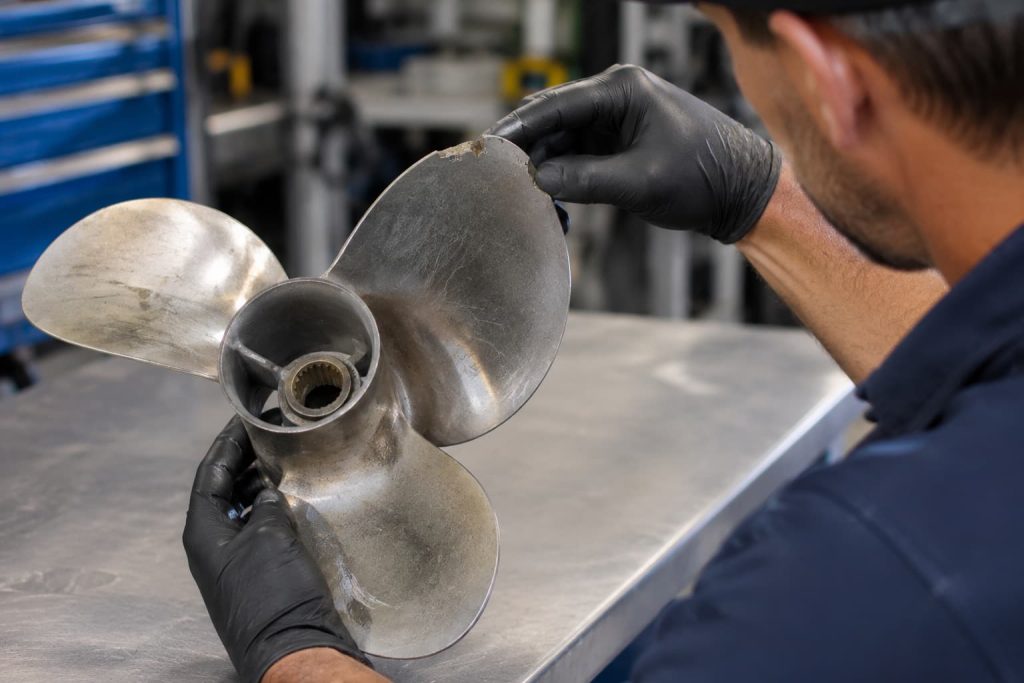
Inspect the propeller regularly for bent blades, cracks, chips, corrosion and signs of impact. Even small damage can affect balance and performance. If a blade is bent or cracked, have the propeller assessed rather than assuming it is safe to continue using.
Also check the propeller hub and mounting hardware. A worn or damaged hub can allow the propeller to slip under load, causing poor acceleration and loss of thrust.
8. Match the Propeller to Your Fishing Conditions
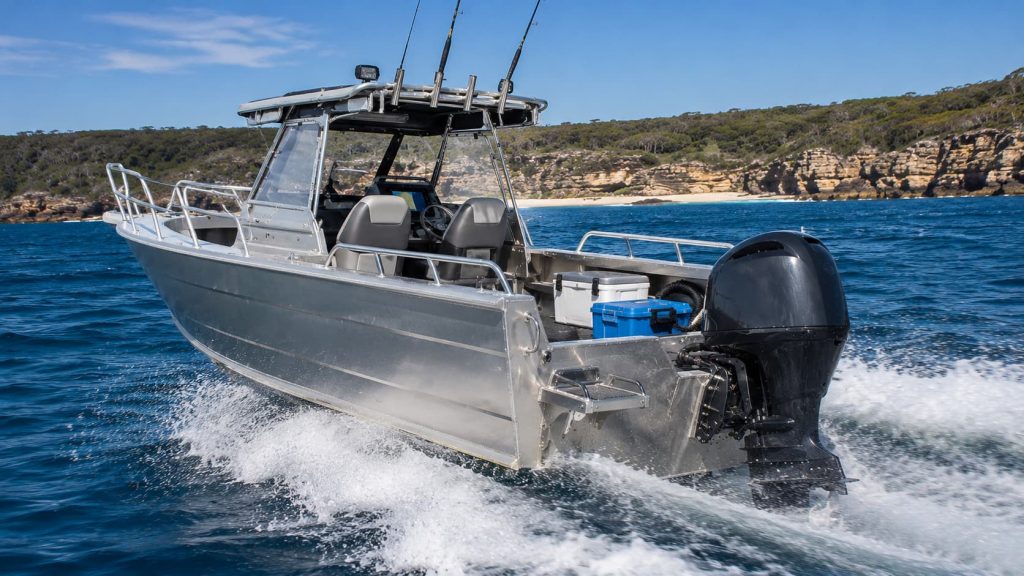
Your usual fishing conditions should influence the final choice. An owner who mostly fishes in sheltered estuaries may have different priorities from someone who regularly travels offshore with a full boat.
For general recreational fishing, a three-blade propeller matched to the engine’s WOT range is often a sensible starting point. If the boat regularly carries heavy loads or struggles to plane, a suitable four-blade design or a lower-pitch option may be worth testing.
Offshore fishing boats need reliable performance under changing loads and conditions. Acceleration, cruising performance and the ability to maintain the correct engine RPM matter more than chasing the highest possible top speed.
If you use the boat for several purposes, explain this to the propeller supplier. They can help find a practical compromise rather than selecting a propeller for just one ideal operating condition.
9. Choosing a Propeller for Sea Raider Aluminium Boats
Sea Raider offers a range of aluminium fishing boats with different hull sizes, layouts and outboard power specifications. The appropriate propeller will depend on the selected model, the engine fitted and the boat’s actual operating weight.
For example, the 7.5m Pro Fisher has a published engine power range of 250hp to 350hp, while the 6.85m Pro Fisher is listed for 200hp to 300hp. These specifications are useful starting points when discussing engine and propeller selection, but they do not establish a universal propeller size for either model.
Owners should provide their engine make, model, gear ratio, existing propeller dimensions, WOT RPM reading and typical fishing load when seeking a recommendation. Sea Raider or an experienced marine dealer can help ensure the propeller is compatible with the engine and suitable for the boat’s configuration.
Avoid choosing a propeller simply because another owner has the same boat length. Differences in engine model, installation, fuel load, accessories and passenger numbers can change the result.
10. A Practical Checklist Before Buying a New Propeller
Before ordering a replacement, gather the information needed to make a proper comparison. Start with the outboard’s make, model, year and horsepower, then check the manufacturer’s recommended WOT RPM range. Record the current propeller’s diameter, pitch, blade count, material and part number if available.
You should also know the boat’s model, hull type, approximate loaded weight and typical use. If possible, record the engine RPM achieved during a safe WOT test with a normal load. Include any performance concerns, such as slow acceleration, difficulty getting onto the plane, excessive RPM or vibration.
A propeller specialist can use these details to narrow down suitable options. If the boat has recently had a different engine installed, do not assume the old propeller remains suitable. A change in horsepower, gear ratio or engine characteristics may require a new propeller selection.
Final Thoughts
Choosing the right propeller for an aluminium fishing boat is about getting the best match between the outboard, hull and normal operating load. Pitch and WOT RPM are the starting points, while blade count, material and design help refine the result.
A lower-pitch propeller may improve acceleration and help a heavily loaded boat reach its intended RPM, while a higher-pitch option may suit a different engine and hull combination. Aluminium and stainless steel both have their place, and neither should be selected without considering the boat’s use.
If you are unsure, speak with your engine dealer or a qualified marine mechanic. A properly matched propeller can help your boat perform as intended, reduce unnecessary strain on the outboard and make time on the water more enjoyable.
Frequently Asked Questions
There is no single best propeller for every aluminium fishing boat. The correct choice depends on the outboard, hull design, boat weight, typical load and intended use. Start by selecting a propeller that allows the engine to reach its recommended WOT RPM range.
Use the pitch that allows your outboard to operate within its manufacturer-specified WOT RPM range under a normal load. A lower pitch generally helps the engine reach higher RPM and improves acceleration, while a higher pitch can reduce RPM and favour speed when the engine has sufficient power.
A three-blade propeller is a common all-round option, while a four-blade design may provide better grip, acceleration and planing performance on some heavier boats. The better choice depends on the hull, engine and how the boat is loaded.
Aluminium is generally more affordable and suitable for many recreational applications. Stainless steel is stronger and can offer performance advantages, but it costs more and may transfer greater impact forces to the gearcase. Choose based on your boat’s use and the manufacturer’s recommendations.
If the engine cannot reach the lower end of its recommended WOT RPM range under a normal load, the pitch may be too high. Other issues, including excessive weight, engine condition and installation, can also cause low RPM, so have the setup checked before changing the propeller.
Not necessarily. A propeller must match the engine’s gearcase and power characteristics. Increasing diameter or pitch without considering the full setup can reduce performance or place excessive load on the engine. Follow the manufacturer’s approved propeller specifications.
Check the propeller before regular use and after suspected impacts with submerged objects. Look for bent blades, cracks, chips, corrosion and hub damage. Remove fishing line wrapped around the propeller shaft only when the engine is safely switched off and secured according to the manufacturer’s instructions.
Yes. A propeller that causes the engine to operate outside its recommended RPM range can place unnecessary strain on the engine. Under-propping can also allow excessive RPM. Check the WOT range and have the setup assessed if the engine is consistently outside its specified limits.
You should reassess the propeller whenever the engine is changed. Different horsepower ratings, gear ratios and power characteristics can affect the correct pitch and propeller design. The old propeller may be useful as a starting reference, but it should not automatically be reused.
Possibly, if the propeller is correctly matched to the boat and performs well under the loads and conditions you normally encounter. If your offshore trips involve significantly more passengers, fuel and equipment, test the setup under that typical load rather than relying on performance in a lightly loaded boat.
Important note: Always follow the outboard manufacturer’s propeller, installation and WOT RPM recommendations. Conduct performance testing only in safe conditions, with the boat correctly loaded and operated by a competent skipper.